

 Language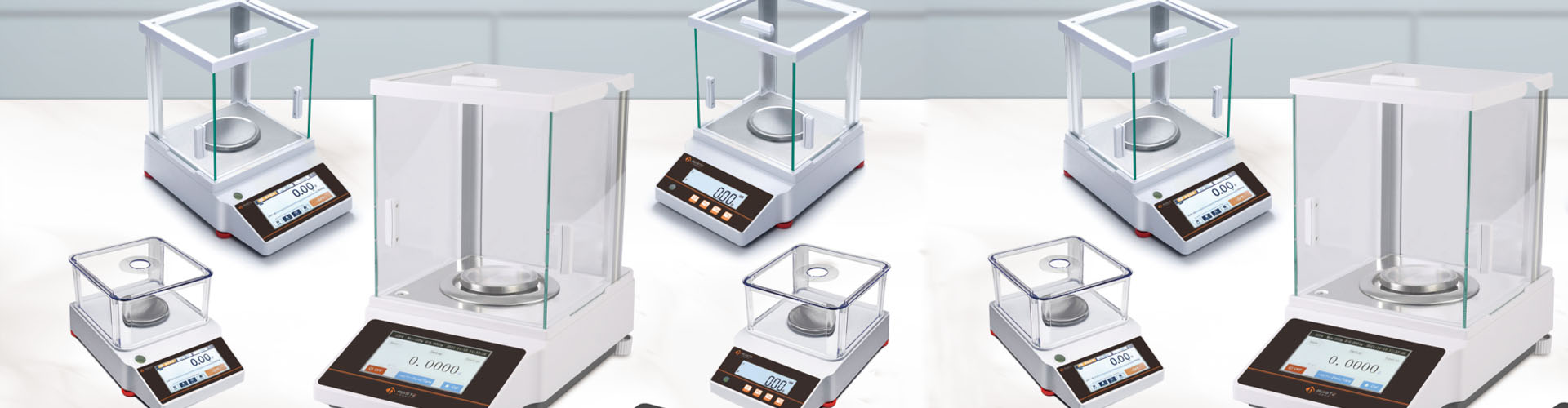
Pruiste is a analytical balance factory in china, the analytical balance is a high-precision electronic or mechanical balance used for laboratory precision weighing, with a weighing accuracy typically reaching 0.1 milligrams (0.0001 grams) or even higher. It is widely used in fields such as chemistry, biology, pharmaceuticals, and materials science, and is an indispensable instrument in quantitative analysis experiments.
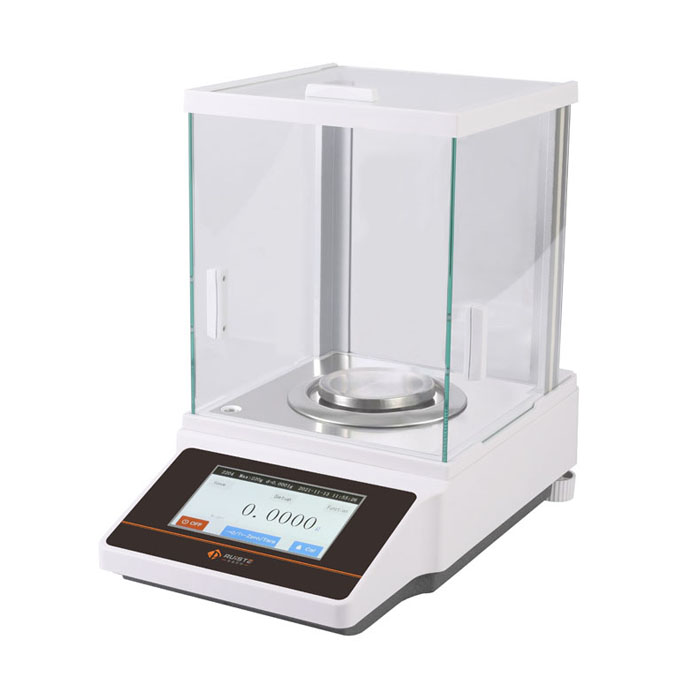
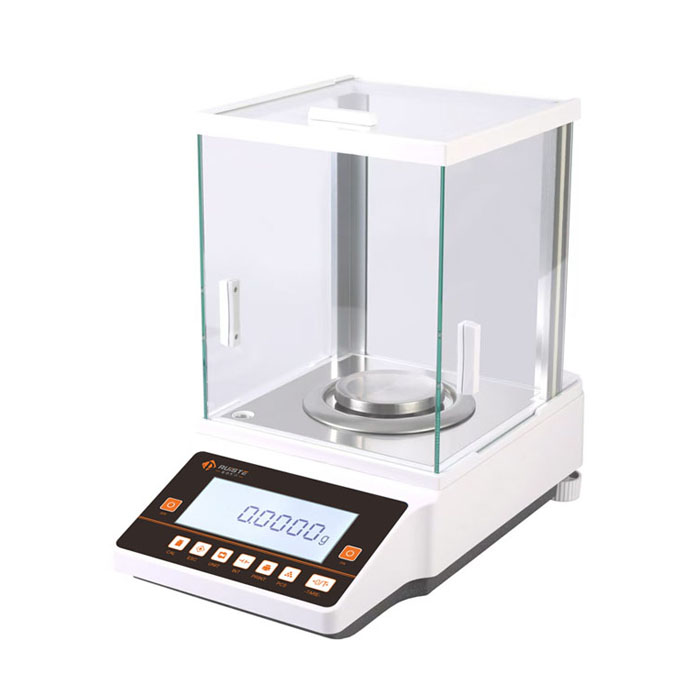
The analytical balance as the "precision eye" of modern laboratories, continues to push the boundaries of scientific research with its technological advancements. In the future, with the integration of artificial intelligence and automation technology, analytical scales will further improve efficiency and accuracy, becoming one of the core equipment in intelligent laboratories.
In the realm of scientific research, quality control, and analytical chemistry, precision is the cornerstone of reliable results. Among the various instruments designed to achieve high-precision measurements, the analytical balance stands out as an indispensable tool. It is engineered to determine the mass of small samples with exceptional accuracy and precision, making it a vital component in laboratories across diverse industries. Unlike ordinary weighing devices, analytical balances are capable of detecting mass variations as small as a few micrograms, enabling researchers and technicians to obtain data that forms the basis of critical decisions, from drug development to environmental monitoring. This article explores the fundamental principles, structural components, operational procedures, maintenance practices, and wide-ranging applications of analytical balances, providing a comprehensive overview of their role in modern scientific and industrial settings.
To understand the significance of analytical balances, it is essential to first distinguish between accuracy and precision, two terms often used interchangeably but with distinct meanings. Accuracy refers to the degree to which a measured value aligns with the true or accepted value of the quantity being measured. Precision, on the other hand, describes the consistency of repeated measurements—how closely multiple readings of the same sample agree with one another. An analytical balance is designed to deliver both high accuracy and high precision, ensuring that each measurement is not only correct but also reproducible. This dual capability is crucial in fields where even the smallest mass variation can have significant implications, such as in pharmaceutical analysis, where the purity of a drug compound must be measured to within strict limits, or in environmental testing, where trace amounts of contaminants need to be detected and quantified.
The operational principle of analytical balances has evolved significantly over time, from the traditional mechanical designs to the modern electronic models that dominate today’s laboratories. Mechanical analytical balances, which were widely used before the advent of electronic technology, operate based on the principle of lever equilibrium. A typical mechanical balance consists of a beam with a fulcrum at its center, two pans suspended from either end, and a series of weights that can be added to one pan to balance the mass of the sample on the other. The beam is equipped with a pointer that indicates when the two pans are in equilibrium, and a vernier scale allows for precise readings of small mass differences. While mechanical balances are robust and reliable, they require careful handling and regular calibration to maintain their accuracy, and they are relatively slow compared to electronic models. Additionally, they are sensitive to environmental factors such as vibration and air currents, which can affect the balance of the beam.
Modern electronic analytical balances, by contrast, utilize advanced technology to achieve higher precision and ease of use. The core component of an electronic analytical balance is the load cell, a device that converts the force exerted by the sample (due to gravity) into an electrical signal. The most common type of load cell used in analytical balances is the electromagnetic force compensation (EMFC) sensor. This sensor consists of a coil suspended in a magnetic field; when a sample is placed on the weighing pan, the pan deflects downward, causing the coil to move within the magnetic field. This movement induces an electric current in the coil, which generates an electromagnetic force that opposes the downward force of the sample. The current required to restore the pan to its original position is proportional to the mass of the sample, and this current is converted into a digital readout that displays the sample’s mass. EMFC-based balances offer several advantages over mechanical balances, including faster measurement times, higher precision, and greater resistance to environmental interference when properly shielded.
The structural components of an analytical balance are carefully designed to support its high-precision functionality. The weighing pan, where the sample is placed, is typically made of corrosion-resistant materials such as stainless steel or aluminum to ensure durability and prevent contamination. The pan is mounted on a rigid support that connects to the load cell, and it is often enclosed within a draft shield—a transparent enclosure with doors that can be opened and closed to protect the sample and the weighing mechanism from air currents, dust, and temperature fluctuations. Air currents are a major source of error in analytical weighing, as even a slight flow of air can exert a force on the sample, leading to inaccurate readings. The draft shield minimizes this effect by creating a stable, enclosed environment around the weighing pan.
Another critical component of an analytical balance is the leveling system, which ensures that the balance is perfectly horizontal. A level balance is essential because any tilt can cause the load to be distributed unevenly, leading to errors in the measurement. Most analytical balances are equipped with adjustable feet and a spirit level (or bubble level) that allows the user to adjust the balance until it is perfectly level. The control panel, typically located on the front or side of the balance, provides access to various functions, such as zeroing the balance (resetting the readout to zero with an empty pan), taring (subtracting the mass of a container from the total mass to obtain the mass of the sample alone), and unit conversion (switching between grams, milligrams, micrograms, and other units). Some advanced models also include features such as data logging, which allows measurements to be stored and transferred to a computer or other device for further analysis, and automatic calibration, which simplifies the process of maintaining accuracy over time.
Calibration is a fundamental aspect of maintaining the accuracy of an analytical balance. Over time, factors such as temperature changes, mechanical wear, and environmental conditions can cause the balance to drift, leading to inaccurate measurements. Calibration involves comparing the balance’s readings to a known standard (a calibrated weight of precise mass) and adjusting the balance if necessary to ensure that its readings align with the standard. There are two main types of calibration: external calibration and internal calibration. External calibration requires the user to manually place a calibrated weight on the weighing pan and adjust the balance to match the weight’s known value. Internal calibration, on the other hand, uses a built-in calibrated weight that is automatically moved onto the pan by the balance’s internal mechanism, allowing for quick and convenient calibration without the need for manual intervention. Regardless of the method used, calibration should be performed regularly—typically daily before use, or whenever the balance is moved, subjected to a significant temperature change, or after any maintenance or repair work.
The environment in which an analytical balance is used plays a crucial role in its performance and accuracy. Temperature stability is particularly important, as changes in temperature can affect the properties of the balance’s components, such as the load cell and the weighing pan, leading to measurement errors. Most analytical balances are designed to operate within a specific temperature range, typically between 15°C and 30°C, and the temperature should not fluctuate by more than 2°C per hour. Humidity is another important factor; high humidity can cause moisture to accumulate on the weighing pan or the sample, leading to increased mass readings, while low humidity can generate static electricity, which can attract dust particles or cause the sample to adhere to the pan. The ideal relative humidity for analytical weighing is between 40% and 70%.
Vibration is another common source of error, as even small vibrations can disrupt the balance’s equilibrium and cause fluctuations in the readout. To minimize vibration, analytical balances should be placed on a stable, vibration-free surface, such as a dedicated balance table or a heavy stone bench. The table should be isolated from sources of vibration, such as centrifuges, pumps, or other laboratory equipment. Additionally, the balance should be placed away from windows, air conditioning vents, and heating sources to avoid drafts and temperature fluctuations. Electromagnetic interference (EMI) can also affect electronic analytical balances, as it can disrupt the electrical signals within the load cell and control circuitry. To prevent EMI, the balance should be kept away from sources of electromagnetic radiation, such as computers, cell phones, and power lines.
Proper operational procedures are essential to ensure accurate and reliable measurements with an analytical balance. Before using the balance, it is important to inspect it for any signs of damage or contamination, such as dirt, dust, or spills on the weighing pan or inside the draft shield. The balance should be leveled and calibrated, as described earlier, and the draft shield should be cleaned if necessary. When placing a sample on the weighing pan, it is important to use clean, dry containers that are appropriate for the type of sample being measured. For example, volatile samples should be placed in a sealed container to prevent evaporation, while corrosive samples should be placed in a resistant container to avoid damaging the pan. The sample and container should be at the same temperature as the balance to prevent condensation or evaporation, which can affect the mass reading. This is particularly important for samples that have been stored in a refrigerator or oven, as they may need to be allowed to equilibrate to room temperature before weighing.
When handling the sample, it is important to avoid touching the weighing pan or the container with bare hands, as oils and moisture from the skin can transfer to the pan or container, adding to the mass. Instead, tweezers, gloves, or forceps should be used to handle the container. The sample should be placed in the center of the weighing pan to ensure that the load is distributed evenly, as placing the sample off-center can cause errors due to uneven force distribution on the load cell. The draft shield doors should be closed during the measurement to prevent air currents from affecting the reading, and the balance should be allowed to stabilize before recording the measurement. Most electronic balances have a stability indicator that shows when the reading has stabilized, ensuring that the measurement is accurate.
There are several common weighing methods used with analytical balances, each suited to different types of samples and applications. The direct weighing method is the simplest and most straightforward: the sample is placed directly on the weighing pan (or in a container that has been tared) and the mass is read directly. This method is suitable for stable, non-hygroscopic samples that do not react with the air or the container. The tare method is used when the sample needs to be measured in a container; the container is placed on the pan, the balance is tared (reset to zero), and then the sample is added to the container, with the readout showing the mass of the sample alone. This method is useful for measuring small or powdery samples that cannot be placed directly on the pan.
The difference weighing method (also known as the减重 method) is used for samples that are hygroscopic, volatile, or reactive with the air. In this method, the sample is placed in a sealed container (such as a weighing bottle), and the total mass of the container and sample is measured. A portion of the sample is then transferred to another container, and the mass of the original container and remaining sample is measured again. The mass of the transferred sample is the difference between the two measurements. This method minimizes exposure of the sample to the air, reducing the risk of moisture absorption or evaporation. The dynamic weighing method is used for samples that are moving or changing, such as liquids that are evaporating or solids that are reacting. This method uses the balance’s ability to average readings over a period of time, providing a stable measurement despite the sample’s changes.
Maintenance is key to ensuring the long-term performance and reliability of an analytical balance. Regular cleaning is essential to prevent contamination, which can affect measurement accuracy. The weighing pan, draft shield, and control panel should be cleaned regularly with a soft, lint-free cloth and a mild cleaning solution (such as isopropyl alcohol) to remove dirt, dust, and spills. Care should be taken to avoid scratching the pan or the inside of the draft shield, as scratches can trap dirt and affect the balance’s performance. The balance should be turned off and unplugged before cleaning to prevent electrical shock.
In addition to cleaning, regular inspection of the balance’s components is important. The leveling feet should be checked to ensure they are secure and that the balance remains level. The draft shield doors should be inspected to ensure they close properly and seal tightly, as a loose seal can allow air currents to enter. The load cell should be checked for any signs of damage or wear, such as cracks or deformation, which can affect its performance. If any components are damaged, they should be replaced promptly by a qualified technician. The balance should also be stored in a clean, dry environment when not in use, and it should be covered with a dust cover to protect it from dust and debris.
Troubleshooting common issues with analytical balances is an important skill for laboratory personnel. One of the most common problems is unstable readings, which can be caused by a variety of factors, including air currents, vibration, temperature fluctuations, or static electricity. To resolve this issue, the user should check that the draft shield is closed, the balance is level, and it is placed on a stable surface away from sources of vibration and air flow. If static electricity is the issue, increasing the humidity in the laboratory or using an anti-static device can help. Another common issue is inaccurate readings, which may be due to calibration drift, contamination, or incorrect operational procedures. Checking the calibration of the balance and cleaning the weighing pan and draft shield can often resolve this problem. If the balance continues to give inaccurate readings, it may need to be serviced by a qualified technician.
Analytical balances find applications in a wide range of industries and fields, each with unique requirements for precision and accuracy. In the pharmaceutical industry, analytical balances are used to measure the mass of drug compounds, excipients, and raw materials, ensuring that the final product meets strict quality standards. They are also used in drug development, where precise measurements are needed to determine the efficacy and safety of new drugs. In analytical chemistry, analytical balances are used for quantitative analysis, such as determining the concentration of a solute in a solution or the purity of a chemical compound. They are essential for techniques such as titration, gravimetric analysis, and chromatography, where accurate mass measurements are critical to the success of the analysis.
In the food and beverage industry, analytical balances are used to ensure the quality and consistency of products. They are used to measure ingredients in food production, ensuring that recipes are followed accurately, and to test for contaminants such as heavy metals or pesticides. In environmental science, analytical balances are used to measure the mass of soil, water, and air samples, enabling researchers to detect and quantify pollutants and monitor environmental quality. They are also used in forensic science, where precise measurements of evidence (such as drugs, fibers, or biological samples) are needed to support criminal investigations.
In the field of materials science, analytical balances are used to measure the mass of materials before and after various treatments, such as heat treatment or chemical reactions, enabling researchers to study the properties and behavior of materials. They are also used in the semiconductor industry, where precise measurements of small components are needed to ensure the performance of electronic devices. In academic and research laboratories, analytical balances are used in a wide range of experiments, from basic chemistry and physics to advanced research in fields such as nanotechnology and biotechnology.
The selection of an analytical balance depends on several factors, including the required precision, the maximum load capacity, the type of samples being measured, and the specific application. Precision is typically specified by the readability of the balance, which is the smallest increment that the balance can measure. For example, a balance with a readability of 0.1 milligram can measure mass differences as small as 0.1 mg, while a balance with a readability of 0.001 mg (1 microgram) can measure even smaller differences. The maximum load capacity refers to the maximum mass that the balance can measure without being damaged; this ranges from a few grams to several hundred grams, depending on the model. The type of sample also influences the selection of the balance; for example, volatile or corrosive samples may require a balance with a sealed weighing chamber, while hygroscopic samples may require a balance with a humidity-controlled environment.
Another factor to consider when selecting an analytical balance is the presence of additional features that can enhance functionality and ease of use. For example, data logging capabilities allow measurements to be stored and transferred to a computer, reducing the risk of human error in recording data. Automatic calibration features simplify the calibration process, ensuring that the balance remains accurate with minimal effort. Some balances also include built-in diagnostics that can detect and alert the user to issues such as calibration drift or component damage, allowing for timely maintenance and repair.
In recent years, technological advancements have led to the development of more advanced analytical balances with improved performance and functionality. For example, some modern balances use advanced sensor technology to achieve higher precision and faster measurement times, while others incorporate touchscreen interfaces and wireless connectivity for easier operation and data transfer. There has also been a focus on improving the user experience, with features such as ergonomic design, easy-to-clean components, and intuitive software that simplifies operation. Additionally, there is a growing emphasis on sustainability, with manufacturers developing balances that are more energy-efficient and made from environmentally friendly materials.
Despite the advancements in technology, the basic principles of analytical weighing remain the same: achieving high accuracy and precision through careful design, proper operation, and regular maintenance. Analytical balances are not just tools; they are essential instruments that enable scientific discovery and ensure the quality and safety of products in a wide range of industries. By understanding the principles, components, and operational procedures of analytical balances, laboratory personnel can ensure that their measurements are accurate, reliable, and reproducible, laying the foundation for successful research, quality control, and innovation.
In conclusion, the analytical balance is a critical instrument in modern science and industry, providing the high-precision measurements needed for a wide range of applications. From its humble mechanical origins to the advanced electronic models of today, the analytical balance has evolved to meet the growing demands for accuracy and reliability. Its structural components, such as the load cell, draft shield, and leveling system, are carefully designed to minimize errors and ensure consistent performance. Proper operation, including calibration, environmental control, and correct weighing techniques, is essential to achieving accurate results. Regular maintenance and troubleshooting help to extend the life of the balance and ensure its continued performance. As technology continues to advance, the analytical balance will remain a vital tool, supporting scientific research and industrial progress for years to come.
 Chinese Mobile
 Whatsapp Service
 WeChat Service


