

 Language
Pruiste is a digital viscometer factory in china, the digital viscometer is a precision instrument used to measure the viscosity of liquids, representing a digital revolution in traditional viscosity measurement techniques. This instrument, controlled by advanced sensor technology and microprocessors, can quickly and accurately measure the viscosity values of various fluids.
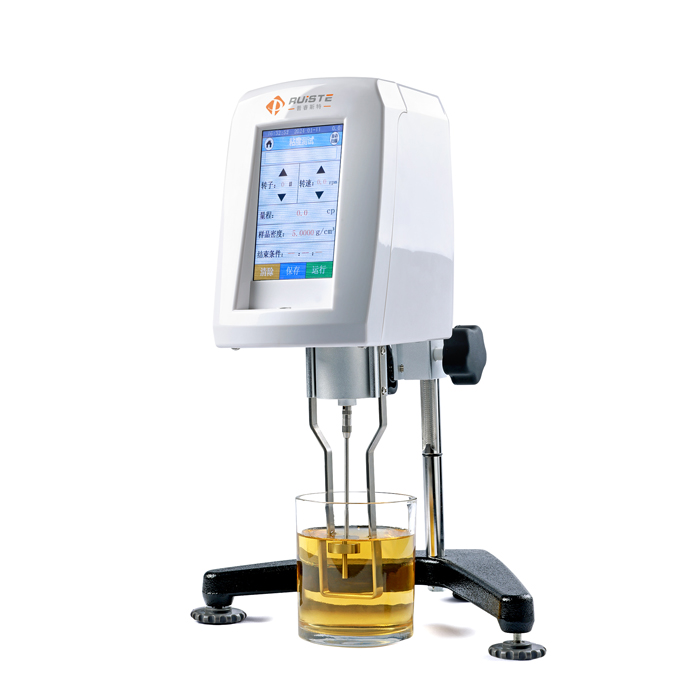
The digital viscometer operates based on the principle of rotational viscosity measurement. When the rotor rotates in liquid, the liquid will generate viscous resistance to the rotor, which is proportional to the viscosity of the liquid. The instrument measures the torque required to maintain a constant speed, or the speed change when maintaining a constant torque, and uses a pre-set calculation formula to obtain the viscosity value.
Modern high-end digital viscometers have multiple advanced features:
The selection of a suitable digital viscometer should consider the following factors:
To ensure measurement accuracy, digital viscometers require regular maintenance and calibration
It is recommended to conduct professional calibration every 6-12 months, or develop a calibration plan based on usage frequency and manufacturer recommendations.
As an important tool in modern laboratories and production sites, the technological advancement of digital viscometers is driving quality control and research and development work in various industries. With the development of intelligence and miniaturization, digital viscometers will become more accurate and convenient in the future, and their application fields will also be further expanded.
A digital viscometer is a precision instrument designed to measure the viscosity of fluids, including liquids and semi-fluids, by converting physical viscosity signals into digital readings. This technology has revolutionized the way viscosity is measured across various industries, offering enhanced accuracy, convenience, and reliability compared to traditional analog viscometers. Viscosity, a fundamental property of fluids, refers to the resistance a fluid exhibits to flow when subjected to an external force. It is a critical parameter that influences product quality, process efficiency, and performance in countless applications, from manufacturing and research to quality control and product development. Understanding the principles, components, operation, and applications of digital viscometers is essential for leveraging their full potential and ensuring consistent, accurate results in any setting.
The core working principle of a digital viscometer is based on measuring the resistance exerted by a fluid on a rotating element, typically a rotor, as it moves through the fluid at a constant speed. When the rotor rotates, the fluid surrounding it creates a viscous drag, which generates a torque. This torque is directly proportional to the fluid’s viscosity, the rotational speed of the rotor, and the geometric parameters of the rotor. The relationship between these variables can be expressed by the formula T = Kηω, where T is the torque, K is the constant related to the rotor’s geometry, η is the viscosity, and ω is the angular velocity of the rotor. Digital viscometers use advanced sensors to detect this torque, convert the mechanical signal into an electrical signal, and then process it through a built-in microprocessor to calculate the viscosity value. This value is then displayed digitally on the instrument’s screen, eliminating the need for manual reading and reducing the risk of human error. Unlike analog viscometers, which require operators to interpret readings from a dial, digital viscometers provide direct, precise measurements that are easy to read and record, making them suitable for both experienced technicians and those with limited training.
The structure of a digital viscometer consists of several key components that work together to ensure accurate and reliable measurements. The measurement system is the heart of the instrument, comprising the rotor and sensors. Rotors come in various shapes and sizes, including cylindrical, disc-shaped, and cone-shaped designs, each tailored to specific viscosity ranges and fluid types. For example, smaller rotors are suitable for low-viscosity fluids, while larger rotors are used for high-viscosity materials. The sensors, often torque sensors, detect the drag force exerted by the fluid on the rotor and convert it into an electrical signal. The drive system, which includes a motor and transmission mechanism, powers the rotor’s rotation at a constant speed. The motor’s stability and precision are crucial, as any fluctuations in rotational speed can affect measurement accuracy. The data processing system, typically a microprocessor or单片机, receives the electrical signal from the sensors, amplifies and filters it, and applies the appropriate algorithms to calculate the viscosity value. This system may also include features such as data storage, temperature compensation, and connectivity options for transferring data to computers or other devices. The display system, usually an LCD screen, presents the viscosity value along with other relevant information, such as rotational speed, torque percentage, and temperature (if a temperature probe is connected). Additionally, many digital viscometers include a temperature control system to regulate the temperature of the sample, as viscosity is highly temperature-dependent. This system may consist of a temperature sensor, heating or cooling elements, and a control circuit to maintain the sample at a specified temperature.
Digital viscometers offer a range of features that make them versatile and user-friendly. One of their key advantages is high precision, with most instruments achieving an accuracy of ±1% to ±5% full scale (FS), depending on the model and application. This level of precision is essential for applications where small changes in viscosity can have a significant impact on product quality, such as in the pharmaceutical and electronics industries. Another important feature is the ability to display readings directly in digital format, which eliminates the visual errors associated with analog dials. Many digital viscometers also offer multiple measurement units, including millipascal-seconds (mPa·s), centipoise (cP), and poise (P), allowing users to select the unit that best suits their needs. Data storage is another useful feature, enabling users to record multiple measurements for later analysis and comparison. Some advanced models can store hundreds or even thousands of data points, and may include features such as date and time stamping to track when measurements were taken. Temperature compensation is a critical feature for ensuring accurate measurements, as viscosity varies significantly with temperature. This feature automatically adjusts the viscosity reading based on the measured temperature of the sample, reducing the need for manual corrections. Connectivity options, such as USB or RS232 ports, allow users to transfer data to computers or printers for further analysis, documentation, or reporting. This is particularly useful in quality control settings where detailed records are required.
Proper operation of a digital viscometer is essential to ensure accurate and reliable measurements. The process begins with preparation, both of the instrument and the sample. First, the instrument should be placed on a stable, level surface to prevent vibrations and ensure proper alignment. The level of the instrument can be checked using the built-in level bubble and adjusted using the leveling feet. Next, the appropriate rotor should be selected based on the estimated viscosity of the sample. Most digital viscometers come with a set of standard rotors, typically numbered 1 to 4, with higher numbers suitable for higher viscosity fluids. The rotor should be carefully attached to the instrument’s drive shaft, ensuring it is securely fastened but not over-tightened, which could damage the shaft or rotor. For low-viscosity or small-volume samples, an L-shaped protective frame may be attached to stabilize the rotor and maintain a standard measurement environment. The sample preparation process is equally important. The sample should be placed in a suitable container, and its temperature should be stabilized to the desired measurement temperature, typically 25°C, using a constant temperature water bath or other temperature control device. Temperature fluctuations should be kept within ±0.1°C to ensure accurate results, as even small changes in temperature can cause significant variations in viscosity. If the sample contains bubbles, it should be degassed before measurement, as bubbles can interfere with the rotor’s movement and lead to inaccurate readings. Degassing can be achieved through methods such as standing, centrifugation, or ultrasonic treatment, depending on the sample type.
Once the instrument and sample are prepared, the measurement process can begin. The instrument should be turned on and allowed to warm up for 15 to 30 minutes to ensure the internal electronic components are stable. In colder environments, the warm-up time may need to be extended to 45 minutes or more. After warm-up, the rotational speed is set based on the rotor selected and the estimated viscosity of the sample. The goal is to ensure that the torque percentage (%TORQUE) falls within the range of 10% to 100%, with the ideal range being 20% to 80%. If the torque percentage is outside this range, the rotor or rotational speed should be adjusted to ensure accurate readings. The rotor is then lowered into the sample, ensuring it is centered in the container and that the凹槽 or scale line on the rotor is immersed 4 to 6 millimeters below the liquid surface. Care should be taken to avoid the rotor touching the container walls or bottom, as this can interfere with the measurement. Once the rotor is properly positioned, the motor is started, and the rotor begins to rotate at the set speed. The user should wait for the readings to stabilize, which typically takes 15 to 30 seconds, although high-viscosity samples may require 2 to 3 minutes to reach dynamic equilibrium. Once stable, the viscosity value, torque percentage, rotational speed, and temperature (if applicable) are displayed on the screen. For more comprehensive data, multiple measurements can be taken at different rotational speeds to determine if the fluid is Newtonian or non-Newtonian. Newtonian fluids have a constant viscosity regardless of rotational speed, while non-Newtonian fluids exhibit changes in viscosity with varying shear rates.
After the measurement is complete, proper post-measurement procedures should be followed to maintain the instrument and ensure accurate results in future use. The motor should be turned off, and the rotor should be carefully raised out of the sample. The rotor and protective frame (if used) should be immediately cleaned with an appropriate solvent, such as alcohol or acetone, depending on the sample type, to remove any residue. A soft cloth or tissue should be used to avoid scratching the rotor surface, which could affect future measurements. For difficult-to-clean residues, the rotor may be soaked in the solvent for a short period before cleaning. Once cleaned, the rotor should be dried thoroughly to prevent corrosion. The instrument should then be turned off, and the power cord disconnected if not in use. A dust cover should be placed over the instrument to protect it from dust and debris. It is also important to record the measurement data, including the viscosity value, temperature, rotor used, rotational speed, and any other relevant details, for future reference and documentation.
Calibration is a critical aspect of maintaining the accuracy and reliability of a digital viscometer. Regular calibration ensures that the instrument is measuring correctly and that any drift or inaccuracies are corrected. Calibration should be performed using standard reference fluids with known viscosity values, which are available in a range of viscosities to match the instrument’s measurement range. The calibration process typically involves the following steps: first, the standard fluid is brought to the desired measurement temperature and degassed if necessary. The appropriate rotor and rotational speed are selected, and the rotor is immersed in the standard fluid as per the normal measurement procedure. The measurement value displayed by the instrument is then compared to the known viscosity value of the standard fluid. If there is a discrepancy, the instrument’s calibration parameters are adjusted to align the measured value with the standard value. Calibration should be performed at regular intervals, typically every 3 to 6 months, or more frequently if the instrument is used heavily or in harsh environments. Additionally, calibration should be performed before important measurement tasks or if the instrument has been moved, dropped, or repaired. It is important to use standard fluids that are within their expiration date and have been stored properly to ensure their accuracy.
Digital viscometers find applications in a wide range of industries, each with unique requirements and challenges. The chemical industry is one of the largest users of digital viscometers, where they are used to monitor the viscosity of polymers, resins, paints, coatings, and solvents. In polymer production, viscosity measurements are critical for optimizing the polymerization process, ensuring the final product has the desired molecular weight and flow properties. For example, in the production of plastic films, the viscosity of the molten polymer must be carefully controlled to ensure uniform thickness and quality. Paints and coatings require precise viscosity control to ensure proper application, flow, and drying properties. A paint that is too thin may run or drip, while a paint that is too thick may be difficult to apply and result in an uneven finish. Digital viscometers allow manufacturers to adjust the formulation of paints and coatings to achieve the desired viscosity, reducing waste and improving product quality.
The food and beverage industry also relies heavily on digital viscometers to ensure product quality and consistency. Viscosity is a key factor in determining the texture, mouthfeel, and stability of many food products, including sauces, jams, syrups, dairy products, and beverages. For example, the viscosity of ketchup affects its ability to flow from the bottle and its texture when eaten. Too high a viscosity may make it difficult to pour, while too low a viscosity may result in a runny product. In the production of yogurt, viscosity measurements are used to monitor the fermentation process and ensure the final product has the desired thickness and creaminess. Syrups and sweeteners require precise viscosity control to ensure they can be easily poured and mixed with other ingredients. Digital viscometers also play a role in the quality control of alcoholic beverages, where viscosity can affect the taste and mouthfeel. By measuring viscosity at various stages of production, food and beverage manufacturers can ensure that their products meet consistent quality standards and consumer expectations.
The pharmaceutical and biotechnology industries use digital viscometers for a variety of applications, particularly in the development and production of drugs, vaccines, and medical devices. Viscosity is an important parameter in the formulation of liquid medications, such as syrups, suspensions, and injectables. For injectable drugs, viscosity must be carefully controlled to ensure the drug can be easily injected and that it flows properly through the syringe. In the production of vaccines, viscosity measurements are used to monitor the stability of the vaccine and ensure it remains effective during storage and transportation. Biologics, such as protein solutions and cell cultures, also require precise viscosity control to maintain their activity and stability. Digital viscometers are also used in the development of medical devices, such as contact lenses and drug delivery systems, where viscosity plays a role in performance and biocompatibility.
The petroleum and energy industry is another major user of digital viscometers, where they are used to measure the viscosity of crude oil, lubricants, fuels, and asphalt. Crude oil viscosity is a critical parameter for determining its flow properties and suitability for transportation and refining. High-viscosity crude oil may require heating or the addition of diluents to reduce its viscosity and facilitate pipeline transportation. Lubricants, such as engine oil and hydraulic fluid, require precise viscosity control to ensure they provide adequate lubrication and protection at different operating temperatures. The viscosity of lubricants affects their ability to form a protective film between moving parts, reducing friction and wear. Fuels, such as diesel and gasoline, have viscosity requirements that affect their atomization and combustion efficiency. Asphalt viscosity is critical for road construction, as it affects the durability and performance of the pavement. Digital viscometers allow petroleum engineers to monitor viscosity at various stages of production, transportation, and refining, ensuring that products meet industry standards and performance requirements.
The cosmetics and personal care industry uses digital viscometers to control the texture and performance of products such as lotions, creams, shampoos, conditioners, and makeup. Viscosity is a key factor in determining the spreadability, absorption, and overall user experience of these products. For example, a lotion with the correct viscosity will spread easily on the skin without being too runny or too thick. Shampoos and conditioners require precise viscosity control to ensure they lather properly and rinse cleanly. Makeup products, such as foundations, lipsticks, and mascaras, rely on viscosity to ensure they apply smoothly and stay in place. Digital viscometers allow cosmetic manufacturers to adjust the formulation of their products to achieve the desired viscosity, improving product performance and consumer satisfaction.
The construction and materials industry uses digital viscometers to measure the viscosity of materials such as cement paste, mortar, sealants, and asphalt mixtures. In concrete production, the viscosity of the cement paste affects the workability of the concrete, which in turn affects its strength and durability. A cement paste with too high a viscosity may be difficult to mix and place, while a paste with too low a viscosity may result in segregation of the aggregates. Sealants and adhesives require precise viscosity control to ensure they bond properly and provide effective sealing. Asphalt mixtures used in road construction require viscosity measurements to ensure they have the correct consistency for paving and to prevent cracking and deformation under traffic. Digital viscometers help construction professionals ensure that materials meet the required specifications and perform well in their intended applications.
In addition to these industries, digital viscometers are also used in research and academic settings, where they are used to study the properties of fluids and develop new materials and processes. Researchers use digital viscometers to investigate the rheological properties of fluids, including their viscosity, shear rate, and shear stress relationships. This information is critical for understanding the behavior of fluids in various applications and for developing new products and technologies. For example, in materials science, digital viscometers are used to study the viscosity of polymers and composites, helping researchers develop materials with improved properties. In environmental science, they are used to measure the viscosity of wastewater and other environmental samples, providing valuable information for pollution control and remediation.
Proper maintenance of a digital viscometer is essential to extend its lifespan and ensure consistent performance. Regular cleaning is one of the most important maintenance tasks. After each use, the rotor, protective frame, and any other parts that come into contact with the sample should be thoroughly cleaned with the appropriate solvent. This prevents the buildup of residue, which can affect measurement accuracy and damage the instrument. The instrument’s exterior should be cleaned regularly with a soft cloth to remove dust and debris. It is also important to check the instrument’s components regularly for signs of wear or damage. The rotor should be inspected for scratches, dents, or corrosion, which can affect its performance. The drive shaft should be checked for alignment and smooth operation, and any loose or damaged parts should be replaced promptly. Lubrication of the drive shaft and other moving parts may be required at regular intervals, following the manufacturer’s recommendations. The instrument should be stored in a clean, dry environment with a temperature range of 10°C to 30°C and a relative humidity of 60% or less. Avoid storing the instrument in areas with excessive dust, moisture, or temperature fluctuations, as these can damage the electronic components and affect performance. If the instrument is not used for an extended period, the rotor should be removed and stored separately in a dry container, and the instrument should be covered with a dust cover.
Troubleshooting common issues with digital viscometers is an important skill for users to ensure minimal downtime and accurate measurements. One common issue is unstable or fluctuating readings, which can be caused by a variety of factors. Possible causes include improper leveling of the instrument, vibrations in the environment, air bubbles in the sample, incorrect rotor selection, or a dirty rotor. To resolve this issue, the user should check the instrument’s level, ensure the measurement environment is free from vibrations, degas the sample, select the appropriate rotor, and clean the rotor thoroughly. Another common issue is readings that are consistently high or low, which may be due to calibration drift, incorrect temperature control, or a damaged rotor. In this case, the instrument should be recalibrated using standard reference fluids, the sample temperature should be checked and adjusted, and the rotor should be inspected for damage. If the instrument fails to start, the user should check the power connection, battery level (if applicable), and fuse. If the display is blank or unresponsive, the power supply should be checked, and the instrument may need to be reset or repaired. It is important to consult the instrument’s user manual for specific troubleshooting instructions and to contact a qualified technician if the issue cannot be resolved.
The future of digital viscometers is likely to involve advancements in technology that further improve accuracy, functionality, and user-friendliness. One area of development is the integration of artificial intelligence (AI) and machine learning (ML) algorithms, which can help automate the measurement process, identify patterns in data, and predict potential issues before they occur. For example, AI-powered digital viscometers could automatically select the appropriate rotor and rotational speed based on the sample type, or alert users to calibration issues or instrument malfunctions. Another area of advancement is the miniaturization of digital viscometers, making them more portable and suitable for field use. Portable digital viscometers are already available, but future models may be even smaller and more lightweight, with improved battery life and connectivity options. Additionally, advancements in sensor technology are likely to improve the accuracy and sensitivity of digital viscometers, allowing them to measure even lower or higher viscosity ranges and detect smaller changes in viscosity. Connectivity features are also expected to evolve, with more instruments offering wireless connectivity and integration with cloud-based data management systems, allowing for real-time data sharing and remote monitoring.
In conclusion, digital viscometers are essential tools for measuring the viscosity of fluids in a wide range of industries and applications. Their ability to provide accurate, reliable, and easy-to-read digital measurements has made them a preferred choice over traditional analog viscometers. By understanding the working principles, components, operation, and maintenance of digital viscometers, users can ensure that they obtain consistent, accurate results and maximize the lifespan of their instruments. From the chemical and food industries to pharmaceuticals and petroleum, digital viscometers play a critical role in ensuring product quality, optimizing processes, and driving innovation. As technology continues to advance, digital viscometers are likely to become even more versatile and powerful, offering new capabilities and opportunities for industries around the world. Whether used in a laboratory, a manufacturing plant, or a field setting, digital viscometers are indispensable tools for anyone working with fluids and their properties.
 Chinese Mobile
 Whatsapp Service
 WeChat Service


