

 Language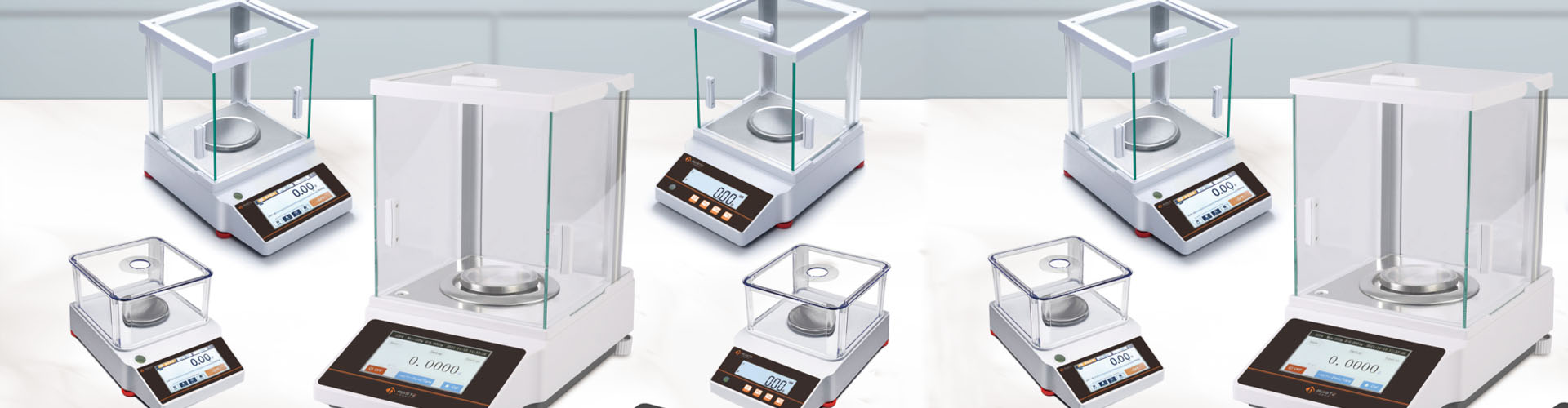
Pruiste is a precision balance factory in china, precision balance is an indispensable high-precision weighing equipment in laboratories, industrial production, and scientific research fields. Its measurement accuracy can usually reach 0.1mg to 0.01mg, or even higher. This type of instrument can accurately measure the mass of substances through electronic sensor technology, providing reliable data support for fields such as chemical analysis, pharmaceutical research and development, and materials science.
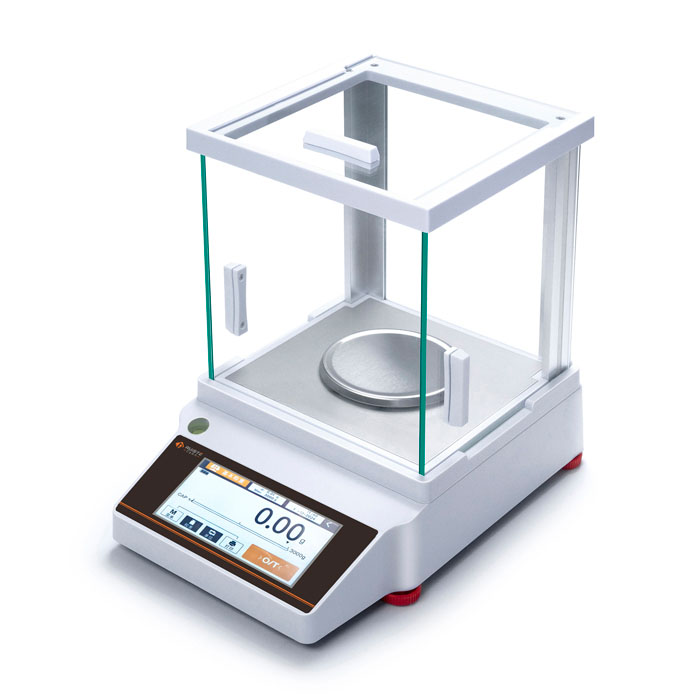
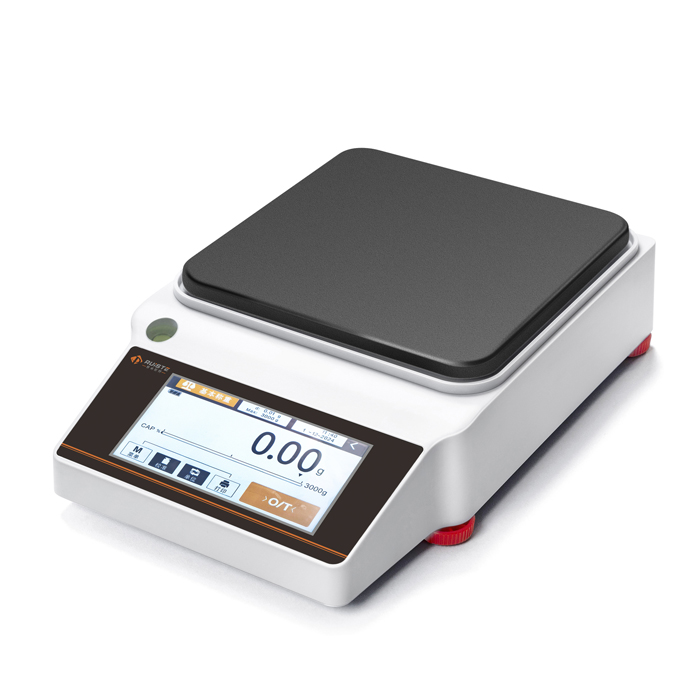
Modern precision balances mainly operate based on the principle of electromagnetic force balance. When the sample is placed on the weighing plate, the sensor inside the balance will generate an electromagnetic force equal to the weight of the sample to maintain balance. The magnitude of this electromagnetic force is converted into a digital signal through precision electronic components and ultimately displayed on the screen in units of mass.
The importance of precision balance as a fundamental equipment for modern scientific research and industrial production is self-evident. Correctly selecting, using, and maintaining precision scales not only ensures the accuracy of measurement data, but also extends the service life of equipment, providing reliable support for scientific research and production.
In the realm of scientific research, industrial production, and quality control, precision balance stands as an indispensable instrument that enables accurate measurement of mass with remarkable consistency. Unlike ordinary weighing tools, precision balance is designed to deliver high readability and stability, making it suitable for scenarios where even the smallest deviation in mass measurement can lead to significant impacts on experimental results, product quality, or process efficiency. From laboratories where researchers conduct delicate chemical analyses to manufacturing facilities where every component’s weight must meet strict standards, precision balance plays a pivotal role in ensuring reliability and accuracy across various fields.
At its core, precision balance operates on the principle of force balance, which involves counteracting the gravitational force exerted by the object being weighed with an equivalent force to achieve equilibrium. The most common mechanism used in modern precision balances is the electromagnetic force compensation principle, which has largely replaced traditional mechanical balance due to its higher accuracy and ease of operation. In this mechanism, the object to be weighed is placed on a weighing pan connected to a coil suspended in a magnetic field. When the object exerts a downward force (due to gravity), the coil experiences a force proportional to the current passing through it. The balance’s electronic system detects the displacement of the weighing pan and adjusts the current in the coil to generate an electromagnetic force that exactly balances the gravitational force of the object. The current required to achieve this balance is then converted into a mass reading, which is displayed on the instrument’s screen. This process happens in a fraction of a second, allowing for quick and accurate measurements.
The structural components of a precision balance work together to ensure its accuracy and stability. The key components include the weighing pan, load cell or electromagnetic coil, signal processing system, display unit, and environmental protection features. The weighing pan is typically made of high-quality materials such as stainless steel, which is resistant to corrosion, easy to clean, and has minimal mass to reduce interference with measurements. The size of the weighing pan varies depending on the balance’s capacity, with smaller pans used for high-precision measurements of small objects and larger pans for heavier loads. The load cell or electromagnetic coil is the core sensing component; in electromagnetic balance, the coil is precisely wound to ensure consistent force generation, while in strain-gauge load cells, the deformation of a strain-sensitive material is converted into an electrical signal proportional to the applied force. The signal processing system, consisting of analog-to-digital converters and microprocessors, processes the electrical signal from the sensing component, corrects for any errors, and converts it into a digital mass reading. The display unit, usually an LCD or LED screen, presents the reading clearly, often with additional information such as unit of measurement, stability indicator, and calibration status. To protect the sensitive components from external interference, most precision balances are equipped with a draft shield—a transparent enclosure that prevents air currents, dust, and temperature fluctuations from affecting the weighing pan. Some advanced models also feature anti-vibration feet to minimize the impact of external vibrations, which can cause reading fluctuations and reduce accuracy.
Precision balances are available in a wide range of types, each designed to meet specific application requirements. The classification of precision balances is often based on their readability, capacity, and intended use. Readability refers to the smallest increment that the balance can measure, and it ranges from 0.1 mg (milligrams) to 1 g (gram) or more. High-precision balances, with readability of 0.1 mg or better, are commonly used in laboratories for tasks such as sample preparation, chemical analysis, and material testing. Medium-precision balances, with readability between 1 mg and 10 mg, are suitable for industrial quality control, where consistent measurement of components or raw materials is required. Low-precision precision balances, with readability of 10 mg or higher, are used in applications where absolute accuracy is less critical but consistency is still important, such as in food processing or packaging.
Another way to classify precision balances is by their operational mode, which includes manual, semi-automatic, and fully automatic models. Manual precision balances require the user to manually adjust the balance to achieve equilibrium, often using weights and knobs. These models are simple in design and relatively affordable but are less efficient and more prone to human error. Semi-automatic balances combine manual operation with electronic assistance, such as automatic zeroing and tare functions, which simplify the weighing process and reduce errors. Fully automatic precision balances are equipped with advanced features such as automatic calibration, data logging, and connectivity to computers or laboratory information management systems (LIMS). These models are highly efficient, accurate, and suitable for high-volume or complex weighing tasks, such as in pharmaceutical manufacturing or advanced research laboratories.
The capacity of a precision balance refers to the maximum mass that it can measure accurately. Capacities range from a few grams to several kilograms, with high-precision models typically having smaller capacities (e.g., 120 g to 500 g) and medium- to low-precision models having larger capacities (e.g., 1 kg to 64 kg). The choice of capacity depends on the size and weight of the objects being weighed; for example, a laboratory analyzing small samples of chemicals would require a balance with a small capacity and high readability, while a manufacturing facility weighing large components would need a balance with a larger capacity and moderate readability. It is important to select a balance with a capacity that exceeds the maximum expected weight of the objects to be weighed, as overloading can damage the balance’s sensitive components and reduce its accuracy over time.
Precision balances find applications in a wide range of fields, each with unique requirements and challenges. In the scientific research sector, precision balances are essential tools in chemistry, biology, physics, and materials science laboratories. In chemistry laboratories, they are used to weigh reagents, samples, and standards with high accuracy, ensuring that chemical reactions are conducted with the correct proportions of reactants. For example, in titration analysis or element detection, the accurate weighing of samples and reagents is critical to obtaining reliable results, with errors often required to be within 1% or less. In biology laboratories, precision balances are used for tasks such as cell culture, protein quantitative analysis, and PCR reaction setup, where the precise measurement of small quantities of reagents is essential for experimental success. In materials science, they are used to measure the mass of nanomaterials, polymers, and composites, supporting research into material properties and performance.
In the pharmaceutical industry, precision balances play a critical role in ensuring the safety and efficacy of drugs. They are used to weigh active pharmaceutical ingredients (APIs), excipients, and intermediates during the manufacturing process, ensuring that each batch of drugs meets the required dosage and quality standards. For example, in tablet production, the weight of each tablet must be consistent within a narrow range, and precision balances are used to monitor the weight of the tablet core and the coating material. In addition, precision balances are used in quality control laboratories to test the purity and potency of drugs, ensuring that they meet regulatory requirements. The accuracy of these measurements is essential, as even small deviations in the amount of API can affect the drug’s effectiveness or cause adverse side effects.
The food and beverage industry also relies heavily on precision balances for quality control and product consistency. In food processing, they are used to weigh raw materials, ingredients, and additives, ensuring that recipes are followed accurately and that each batch of product has the same taste, texture, and nutritional content. For example, in chocolate production, the precise weighing of cocoa, sugar, and other ingredients is essential to maintaining the desired flavor and consistency, with errors in ingredient weight potentially leading to significant differences in the final product. In beverage production, precision balances are used to weigh flavorings, sweeteners, and preservatives, ensuring that the beverage’s taste and quality are consistent across batches. They are also used in packaging facilities to check the weight of packaged products, ensuring that they meet the stated weight on the label.
In the electronics industry, precision balances are used to weigh small components such as resistors, capacitors, and semiconductor chips, ensuring that they meet the required specifications. The miniaturization of electronic components has increased the demand for high-precision balances, as even tiny deviations in weight can affect the performance of the component. For example, 0402 size chip resistors weigh only about 0.003 g, requiring a high-precision balance with readability of 0.01 mg or better to measure accurately. Precision balances are also used in the production of batteries, where the weight of electrode materials and electrolytes must be measured precisely to ensure the battery’s performance and lifespan.
The medical and healthcare sector uses precision balances in various applications, including clinical laboratories, pharmacies, and medical device manufacturing. In clinical laboratories, they are used to weigh blood, urine, and other biological samples, supporting diagnostic tests such as hemoglobin measurement and biochemical analysis. For example, hemoglobin determination requires weighing 0.02 g of sample with an accuracy of ±0.0001 g. In pharmacies, precision balances are used to compound medications, ensuring that the correct dosage of each drug is mixed for individual patients. In medical device manufacturing, they are used to weigh components of medical devices such as pacemakers, implants, and diagnostic equipment, ensuring that they meet the required safety and performance standards.
Other fields where precision balances are commonly used include environmental monitoring, jewelry manufacturing, and education. In environmental monitoring, they are used to weigh soil samples, water samples, and air particulate matter, supporting research into pollution levels and environmental quality. In jewelry manufacturing, precision balances are used to weigh precious metals and gemstones, ensuring that they meet the required purity and weight standards. In education, they are used in physics and chemistry classrooms to teach students about measurement principles and laboratory techniques, replacing traditional triple beam balances for their ease of use and accuracy.
To ensure the accuracy and reliability of precision balance measurements, proper operation is essential. Before using a precision balance, it is important to prepare the instrument and the environment to minimize interference. The first step is to place the balance on a stable, level surface, away from sources of vibration, air currents, and temperature fluctuations. Vibration from nearby equipment such as centrifuges, oscillators, or pumps can cause the weighing pan to move, leading to fluctuating readings. Air currents from open windows, air conditioners, or fans can also affect the measurement, especially for high-precision balances. Temperature fluctuations can cause the balance’s components to expand or contract, leading to errors in the measurement. Therefore, the balance should be placed in a room with a constant temperature, typically between 20°C and 25°C, with minimal temperature variation (≤0.5°C per hour). The humidity in the room should also be controlled, ideally between 45% and 65% relative humidity, to prevent corrosion of the balance’s components and the buildup of static electricity, which can attract dust and affect the weighing pan.
Once the balance is properly positioned, it should be turned on and allowed to warm up for a specified period. The warm-up time varies depending on the balance’s type and precision, with high-precision models requiring longer warm-up times (e.g., 30 minutes to 2 hours) to ensure that the electronic components reach a stable operating temperature. During the warm-up period, the balance’s internal systems stabilize, reducing the impact of temperature changes on the measurement. After warm-up, the balance should be calibrated to ensure its accuracy. Calibration involves comparing the balance’s readings to a known standard weight, and adjusting the balance if necessary. Calibration can be done manually using external standard weights or automatically if the balance is equipped with an internal calibration function. It is important to calibrate the balance regularly, as factors such as temperature changes, movement, and wear can affect its accuracy over time. For high-precision applications, calibration should be performed daily or before each use, while for less critical applications, weekly or monthly calibration may be sufficient.
When weighing an object, it is important to follow proper procedures to minimize errors. The object should be at room temperature before being placed on the weighing pan, as temperature differences between the object and the balance can cause air currents or thermal expansion, leading to inaccurate readings. For example, a cold object placed on a warm weighing pan will cause condensation, increasing the object’s apparent weight, while a hot object will cause air to rise around it, decreasing the apparent weight. The object should be placed in the center of the weighing pan to ensure that the force is evenly distributed, as placing it off-center can lead to errors due to uneven loading. It is also important to use clean, dry weighing containers to hold the object, as any residue or moisture on the container can affect the measurement. The tare function should be used to subtract the weight of the container from the total weight, allowing for accurate measurement of the object’s mass alone. The tare function is particularly useful when weighing multiple samples in the same container, as it eliminates the need to weigh the container separately each time.
After weighing, the object should be removed from the weighing pan, and the balance should be zeroed to prepare for the next measurement. The weighing pan and draft shield should be cleaned regularly to remove any dust, residue, or spills, as these can affect the balance’s accuracy and performance. Cleaning should be done using a soft, lint-free cloth and a mild cleaning solution, avoiding harsh chemicals that can damage the balance’s components. It is also important to avoid touching the weighing pan with bare hands, as oils and moisture from the skin can leave residues that affect the measurement. Instead, gloves or tweezers should be used to handle the weighing pan and objects.
Proper maintenance is essential to extend the lifespan of a precision balance and ensure its continued accuracy. Regular maintenance tasks include cleaning, calibration, and inspection of the balance’s components. The draft shield should be cleaned regularly to remove dust and fingerprints, which can interfere with air flow and visibility. The weighing pan should be cleaned after each use to remove any residue, and it should be inspected for damage such as scratches or dents, which can affect the measurement. The balance’s anti-vibration feet should be checked regularly to ensure that they are properly adjusted and providing adequate stability. The power cord and connections should also be inspected for damage, and the balance should be kept away from moisture and extreme temperatures to prevent corrosion and damage to the electronic components.
In addition to regular maintenance, it is important to handle the balance with care to avoid damage. The balance should not be moved unnecessarily, and if it is moved, it should be calibrated again before use to account for changes in location and gravity. Overloading the balance should be avoided, as this can damage the load cell or electromagnetic coil, leading to permanent inaccuracies. The balance should also be turned off when not in use to conserve power and reduce wear on the electronic components. If the balance develops a fault, such as inconsistent readings, failure to zero, or error messages, it should be taken out of service and inspected by a qualified technician. Attempting to repair the balance without proper training can cause further damage and compromise its accuracy.
Several factors can affect the accuracy of precision balance measurements, and it is important to be aware of these factors to minimize errors. Environmental factors such as temperature, humidity, vibration, and air currents are among the most common sources of error. As mentioned earlier, temperature fluctuations can cause the balance’s components to expand or contract, leading to changes in the balance’s sensitivity. Vibration can cause the weighing pan to move, resulting in fluctuating readings, while air currents can exert a force on the weighing pan, altering the measurement. To minimize these effects, the balance should be placed in a controlled environment, and the draft shield should be closed during measurements.
Another factor that can affect accuracy is the calibration of the balance. If the balance is not calibrated regularly or if the calibration weights are inaccurate, the measurements will be unreliable. It is important to use calibration weights that are traceable to national or international standards, and to store them in a clean, dry environment to prevent damage or contamination. The calibration process should be performed correctly, following the manufacturer’s instructions, to ensure that the balance is adjusted properly.
Operational errors can also lead to inaccurate measurements. For example, placing the object off-center on the weighing pan, not allowing the object to reach room temperature, or using a dirty or wet weighing container can all introduce errors. It is important to train users on proper weighing procedures to minimize these errors, and to provide clear instructions for operating the balance. In addition, the user should be aware of the balance’s limitations, such as its capacity and readability, and should not use it for measurements that exceed these limitations.
Gravity acceleration is another factor that can affect the accuracy of precision balance measurements. Gravity acceleration varies with latitude and altitude; for example, it is higher at the poles than at the equator, and lower at higher altitudes. If the balance is calibrated in one location and then moved to another location with a different gravity acceleration, the measurements will be inaccurate unless the balance is recalibrated. Some advanced precision balances are equipped with automatic gravity compensation, which adjusts the measurement based on the local gravity acceleration, but most balances require manual recalibration when moved.
The future of precision balance technology is focused on improving accuracy, efficiency, and connectivity. Advances in electronic technology have led to the development of more precise and reliable precision balances, with higher readability and faster measurement times. For example, some modern precision balances can measure mass with a readability of 0.001 mg, making them suitable for ultra-high-precision applications such as nanotechnology research. In addition, many precision balances now feature connectivity options such as USB, RS232, or Wi-Fi, allowing them to be connected to computers, LIMS, or other devices for data logging, analysis, and remote control. This connectivity enables users to automate the weighing process, reduce human error, and streamline data management.
Another area of development is the integration of advanced sensors and software into precision balances. For example, some balances are equipped with temperature and humidity sensors that automatically adjust the measurement to compensate for environmental changes, improving accuracy. Others feature built-in applications such as density measurement, counting, and percentage weighing, which simplify complex weighing tasks and reduce the need for additional equipment. The use of artificial intelligence (AI) and machine learning is also being explored to improve the performance of precision balances, with AI algorithms able to detect and correct for errors in real time, predict maintenance needs, and optimize the weighing process.
In addition to technological advances, there is a growing focus on sustainability in the design and manufacturing of precision balances. Manufacturers are using more environmentally friendly materials and processes, reducing energy consumption, and designing balances that are easier to repair and recycle. This focus on sustainability not only benefits the environment but also reduces the total cost of ownership for users, as energy-efficient balances consume less power and durable designs reduce the need for frequent replacement.
In conclusion, precision balance is a vital instrument in scientific research, industrial production, and quality control, enabling accurate and consistent measurement of mass across a wide range of applications. Its operation is based on the principle of force balance, with modern models using electromagnetic force compensation for high accuracy and ease of use. Precision balances are available in various types, sizes, and capacities, each designed to meet specific application requirements. Proper operation, calibration, and maintenance are essential to ensure their accuracy and reliability, and users should be aware of the factors that can affect measurement results. With ongoing technological advances, precision balances are becoming more precise, efficient, and connected, supporting the development of new technologies and industries. As the demand for accurate measurement continues to grow, precision balance will remain an indispensable tool for ensuring quality, reliability, and innovation in various fields.
The versatility of precision balances is one of their most notable features, as they can be adapted to meet the needs of diverse industries and applications. Whether used in a laboratory to weigh tiny samples of chemicals, in a pharmaceutical plant to ensure drug dosage accuracy, or in a manufacturing facility to monitor component weight, precision balances play a critical role in maintaining standards and ensuring consistency. As technology continues to evolve, precision balances will continue to improve, offering even higher accuracy, faster measurement times, and more advanced features to meet the changing needs of users. By understanding the principles, applications, and maintenance requirements of precision balances, users can maximize their performance and ensure that their measurements are reliable and accurate, supporting the success of their research, production, and quality control efforts.
It is also important to note that while precision balances are highly accurate, they are not infallible. Regular calibration and maintenance are essential to keep them performing at their best, and users should always follow proper operating procedures to minimize errors. By investing in a high-quality precision balance and taking the time to care for it properly, users can ensure that it provides reliable measurements for many years to come. Whether in a small laboratory or a large manufacturing facility, the importance of precision balance cannot be overstated, as it is the foundation of accurate measurement and quality control in countless industries.
 Chinese Mobile
 Whatsapp Service
 WeChat Service


