

 Language
A digital analytical balance is a high-precision laboratory instrument designed for ultra-accurate mass measurement of tiny substance samples. It adopts advanced electromagnetic force technology and digital sensing systems to deliver stable, repeatable microgram-level readings for scientific research and industrial precision testing.
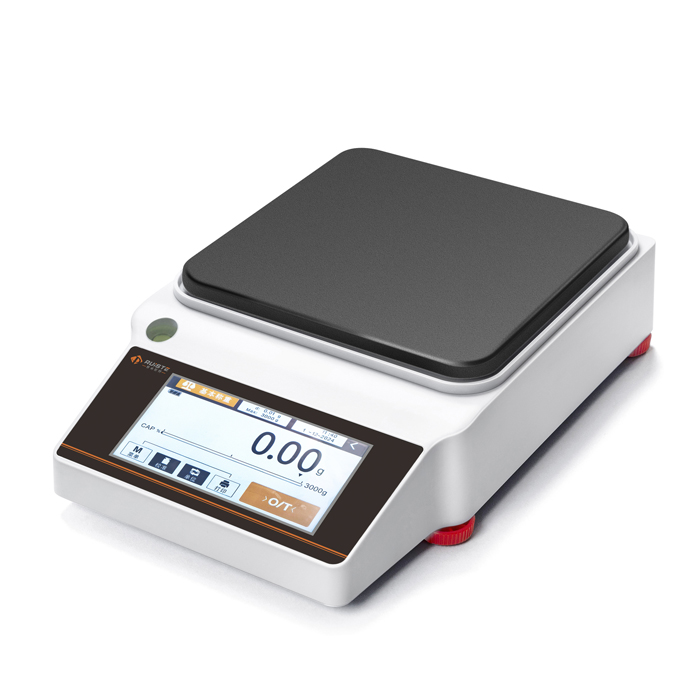
Digital analytical balances stand out from conventional weighing tools primarily due to their exceptional measurement precision tailored for micro-scale sample detection. Unlike ordinary electronic scales that only support coarse mass reading, these professional instruments can capture subtle mass changes down to 0.1 milligrams, enabling accurate quantification of trace substances that cannot be measured by standard equipment. The core advantage lies in their highly sensitive sensing structure, which eliminates the measurement errors common in mechanical balances caused by friction, manual reading deviation, and mechanical fatigue. Every weighing result is digitally calculated and output, ensuring consistency and traceability for each test datum, which forms the core foundation of quantitative analysis in modern laboratory operations.
The operational core of modern digital analytical balances relies on the mature electromagnetic force restoration mechanism, a sophisticated technical principle that guarantees ultra-high measurement accuracy. When a sample is placed on the weighing pan, it generates a slight downward gravitational force that triggers minimal displacement of the internal coil component. Built-in optical sensors instantly capture this tiny positional change and transmit electrical signals to the central control circuit. The system then adjusts the current passing through the magnetic field coil in real time to generate a reverse electromagnetic force that completely counteracts the sample’s weight, restoring the weighing pan to its original balanced position. The precise current value required to maintain balance is converted into specific mass data through algorithm calculation, forming the final digital display reading.
Equipped with a professional draft shield structure, digital analytical balances effectively resist external environmental interference that affects micro-weighing accuracy. Tiny airflows, indoor temperature fluctuations, and subtle dust floating in the air can all cause obvious errors in ultra-precise weighing processes. The fully enclosed transparent shield adopts a multi-sided movable design, which allows convenient sample placement and tool access while isolating internal and external air convection. This structural design stabilizes the micro-pressure environment around the weighing pan, preventing airflow disturbance from altering the stress state of the sensing component. Meanwhile, the shield’s high-transparency material ensures clear observation of the weighing state without generating visual interference or light reflection errors.
Intelligent functional configurations greatly optimize the operational efficiency and measurement convenience of digital analytical balances for daily laboratory use. Most modern models integrate an automatic tare function that can quickly zero out the weight of containers such as weighing papers, crucibles, and test tubes, directly obtaining the net mass of target samples and avoiding repeated weighing calculations. The automatic calibration function further reduces manual operation errors; the instrument can monitor internal parameter changes caused by temperature and humidity shifts in real time and complete self-calibration regularly to maintain long-term measurement stability. Additionally, the high-definition digital display screen presents readings clearly and intuitively, effectively avoiding the visual errors inherent in pointer-type mechanical equipment.
Digital analytical balances have become indispensable core equipment in pharmaceutical research and quality control workflows. In drug formulation experiments, researchers need to accurately weigh trace active pharmaceutical ingredients, auxiliary materials, and control sample ratios to ensure the safety and efficacy of finished drugs. During pharmaceutical quality inspection, the instrument is used for quantitative detection of residual components, impurity content, and effective ingredient content in finished products. Its ultra-high precision ensures that every batch of drug samples meets experimental design requirements and uniform quality standards, providing reliable data support for pharmaceutical formula optimization, batch production stability, and drug safety verification.
In academic research and university laboratory teaching, digital analytical balances undertake critical teaching and experimental research tasks. For basic chemistry and biology experiments, they help students master standard precision weighing operations, cultivate rigorous quantitative analysis thinking, and understand the corresponding relationship between mass changes and experimental reaction results. For advanced scientific research projects involving material synthesis, biochemical reaction quantification, and trace component analysis, the instrument provides accurate mass data for experimental data recording, result verification, and conclusion derivation. Its simple operation and stable performance reduce experimental variable errors, ensuring the reproducibility and scientific validity of academic research results.
The food and beverage industry relies heavily on digital analytical balances for product formulation optimization and quality safety monitoring. In new product research and development, technicians accurately weigh various raw materials, additives, and functional components to adjust formula proportions, optimize product taste, nutritional composition, and shelf life. In routine quality control links, the instrument is used to detect trace impurities, residual components, and nutritional element content in finished food products. Precise weighing data helps enterprises standardize production formulas, control product quality differences between batches, and effectively avoid product quality fluctuations caused by inaccurate raw material ratios or unqualified residual content.
Environmental testing laboratories depend on digital analytical balances to complete accurate detection of environmental pollutant indicators. In air quality monitoring experiments, researchers weigh filter membranes before and after dust collection to calculate the mass of suspended particulate matter in the air. In water quality and soil testing, the instrument is used for precise weighing of sediment samples, residual pollutants, and extracted test components to quantify the content of harmful substances in environmental samples. The high sensitivity of the instrument ensures that trace pollutants that are difficult to detect with ordinary equipment can be accurately measured, providing reliable data support for environmental pollution assessment, governance effect detection, and environmental quality monitoring.
Forensic detection and analytical testing fields also widely apply digital analytical balances for trace evidence analysis. In forensic investigation work, many key evidences such as tiny fiber fragments, trace drug residues, and micro-scale chemical contaminants have extremely small mass and require ultra-precise weighing for component analysis and source tracing. The stable and accurate measurement performance of digital analytical balances can capture subtle mass differences of trace samples, providing effective data basis for evidence identification, case analysis, and result judgment. Its high repeatability also ensures that repeated detection of the same sample can obtain consistent and credible results.
Daily maintenance and standardized operation are key to maintaining the long-term accuracy and service life of digital analytical balances. Operators need to place the instrument on a stable, horizontal work platform to avoid vibration and tilt affecting the internal sensing balance state. The weighing pan and draft shield cavity should be kept clean and dry at all times; residual sample dust and liquid stains need to be cleaned in a timely manner to prevent corrosion or weight interference. It is necessary to avoid placing excessive temperature-difference samples directly on the weighing pan, as temperature radiation will cause air convection and affect weighing stability. Regular manual calibration and parameter inspection can effectively eliminate drift errors caused by long-term operation.
Compared with traditional mechanical analytical balances, digital analytical balances show comprehensive advantages in performance, operation, and data management. Mechanical equipment relies on manual weight matching and pointer reading, which is not only time-consuming and labor-intensive but also prone to human errors. Digital models realize fully automatic sensing, calculation, and display, greatly improving weighing efficiency while reducing manual operation intervention. Moreover, modern digital analytical balances support stable data output and recording, which is convenient for laboratory data archiving, experimental result sorting, and data traceability management, adapting to the standardized and intelligent development trend of modern laboratory management.
With the continuous progress of precision manufacturing and electronic sensing technology, digital analytical balances are constantly evolving toward higher sensitivity, stronger anti-interference ability, and more intelligent functions. Future optimized models will further adapt to complex laboratory environments, realizing more accurate measurement of ultra-trace samples and more convenient human-computer interaction experience. As core precision weighing equipment, digital analytical balances will continue to provide reliable technical support for technological innovation, industrial quality control, and scientific experimental research in multiple professional fields.
Pruiste supply precision balance,analytical balance,laboratory balance,moisture analyzer,digital viscometer,weighing scale,counting scale for sale, wholesale and custom fabrication. we are a professional manufacturer and supplier of electronic balance in china.
 Chinese Mobile
 Whatsapp Service
 WeChat Service


