

 Language
Digital laboratory balances are high-precision electronic weighing instruments designed for accurate mass measurement in scientific and industrial settings. They adopt advanced electromagnetic compensation technology, delivering stable, fast, and reliable weighing results for diverse laboratory experimental and testing scenarios.
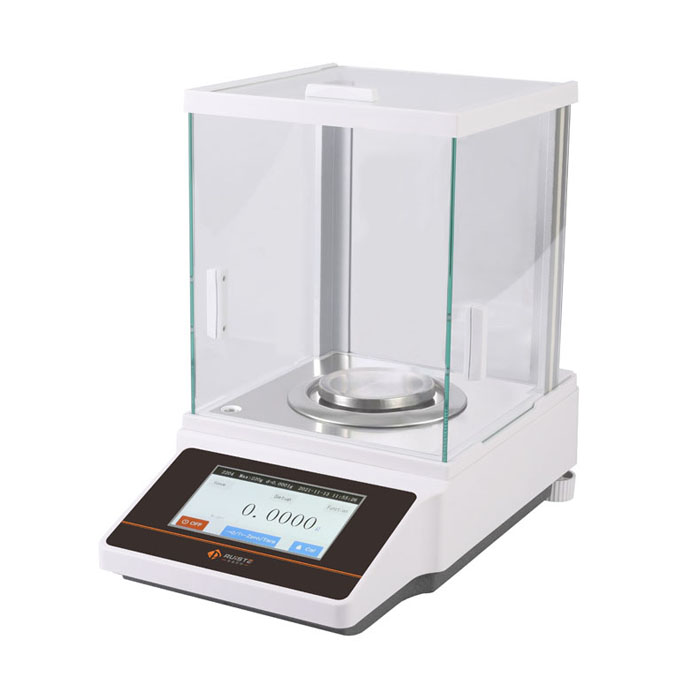
Modern digital laboratory balances stand out from traditional mechanical weighing tools due to their exceptional precision and intelligent operational design. Unlike mechanical balances that rely on manual weight adjustment and visual observation, digital models integrate sophisticated sensor systems and microprocessor modules to automate the entire weighing process. The core design focuses on eliminating human operational errors and environmental interference, ensuring that every weighing data output is consistent and repeatable. These devices are engineered to capture tiny mass changes, making them indispensable for scenarios that require strict numerical accuracy and data stability in daily laboratory work.
The core working mechanism of digital laboratory balances is based on electromagnetic force compensation technology, which serves as the foundation of their high-precision performance. When a sample is placed on the weighing pan, the slight downward displacement of the pan is instantly detected by a built-in position sensor. The sensor converts this mechanical displacement into a weak electrical signal, which is then amplified and transmitted to the internal microprocessor. The system automatically adjusts the current in the built-in coil to generate a reverse electromagnetic force that counteracts the gravity of the sample, restoring the weighing pan to its original balanced position. The magnitude of the adjusted current corresponds precisely to the sample’s mass, and the microprocessor converts this electrical signal into intuitive digital weighing data displayed on the screen.
Equipped with a series of practical functional configurations, digital laboratory balances greatly optimize laboratory weighing efficiency and operational convenience. The tare function is one of the most commonly used core features, allowing users to deduct the weight of containers such as beakers and weighing papers with one click, so as to directly obtain the net mass of experimental samples. Most models support multi-unit conversion, enabling flexible switching between different weighing units to adapt to varied experimental standards and testing habits. Additionally, the automatic calibration function can correct minor accuracy deviations caused by long-term use or subtle environmental changes, maintaining long-term weighing stability without frequent manual debugging by operators.
Environmental adaptability design is a key advantage of high-quality digital laboratory balances, effectively reducing external interference with weighing results. Most precision models are fitted with transparent wind shields that block airflow fluctuations in the laboratory space, which is crucial for weighing tiny samples with ultra-low mass. The base is equipped with adjustable support feet and a level indicator, helping users correct the placement level of the equipment on uneven laboratory countertops. This structural design avoids weighing errors caused by tilting installation, ensuring the balance always operates in a standardized and stable mechanical state during use.
Digital laboratory balances are embedded with complete safety protection mechanisms to extend service life and reduce equipment failure risks. The built-in overload protection system can automatically trigger a protection response when the sample weight exceeds the equipment’s measuring range, preventing irreversible damage to internal sensors and coil structures. Meanwhile, the internal circuit system has anti-interference design, which can resist the influence of subtle voltage fluctuations and electromagnetic signals in the laboratory environment, avoiding data jumping and inaccurate measurement results. These protective designs make the equipment more durable and suitable for long-term continuous laboratory operation.
Data transmission and intelligent connection functions further enhance the practical value of digital laboratory balances in modern laboratory management. Most mainstream devices are equipped with standard data interfaces, supporting stable connection with laboratory computers, data recorders and other terminal equipment. This allows real-time transmission of weighing data, realizing automatic recording, sorting and storage of experimental data, and avoiding data errors or omissions caused by manual transcription. The intelligent data management mode not only improves the efficiency of experimental data sorting, but also facilitates subsequent data review, analysis and experimental result verification.
These precision weighing devices have a wide range of application scenarios covering multiple professional fields. In scientific research laboratories, they are used for accurate sample preparation and reagent weighing in chemical, biological and physical experiments, providing reliable basic data for experimental research. In pharmaceutical research and development and testing links, they assist in the precise proportioning of active ingredients and auxiliary materials to ensure the uniformity and stability of drug formulas. In food testing and environmental monitoring fields, they are applied to sample weighing and pollutant residue detection, supporting accurate experimental analysis and quality judgment.
Standardized daily operation is essential to maintain the long-term accuracy and stability of digital laboratory balances. Before each use, operators need to check the equipment level and clean the weighing pan to remove residual samples and dust that may affect measurement results. It is necessary to preheat the equipment for a certain period of time according to operational requirements to stabilize the internal circuit and sensor state. During weighing, samples should be placed gently in the center of the weighing pan to avoid impact force causing sensor deviation, and over-range weighing operations must be strictly prohibited to protect the core components.
Scientific daily maintenance can effectively extend the service life of digital laboratory balances and maintain stable working performance. After daily use, the weighing pan and wind shield should be cleaned in time to keep the equipment surface clean and tidy, preventing sample residue from corroding the equipment or affecting subsequent measurements. The equipment should be placed in a dry, cool and dust-free laboratory environment, avoiding long-term exposure to high temperature, humidity and strong corrosive gas environments. Regular comprehensive calibration and performance detection can eliminate subtle accuracy deviations and ensure consistent measurement reliability.
Compared with traditional mechanical weighing equipment, digital laboratory balances have obvious comprehensive performance advantages. They achieve faster weighing response speed, with stable data output completed in a short time after sample placement, greatly improving laboratory work efficiency. Their intuitive digital display mode avoids visual reading errors existing in mechanical pointer scales. Moreover, the intelligent functional design and automatic calibration system reduce the dependence on professional operational experience, enabling more standardized and convenient weighing operations for laboratory staff.
With the continuous upgrading of laboratory scientific research and testing standards, digital laboratory balances are evolving towards higher precision, stronger intelligence and better environmental adaptability. Continuous optimization of internal sensor technology and algorithm programs further improves the sensitivity and stability of micro-mass measurement. The continuous expansion of intelligent functions such as automatic data analysis and equipment state self-inspection makes the equipment more adaptable to the intelligent and automated development trend of modern laboratories, becoming a core basic equipment for scientific research, testing and quality control work.
Pruiste supply precision balance,analytical balance,laboratory balance,moisture analyzer,digital viscometer,weighing scale,counting scale for sale, wholesale and custom fabrication. we are a professional manufacturer and supplier of electronic balance in china.
 Chinese Mobile
 Whatsapp Service
 WeChat Service


