

 Language
Industrial analytical balances are high-precision weighing instruments designed for accurate micro-mass measurement in industrial and laboratory settings. They deliver reliable, sensitive readings for tiny sample quantities, supporting precise quality control, research, and material analysis across diverse professional fields.
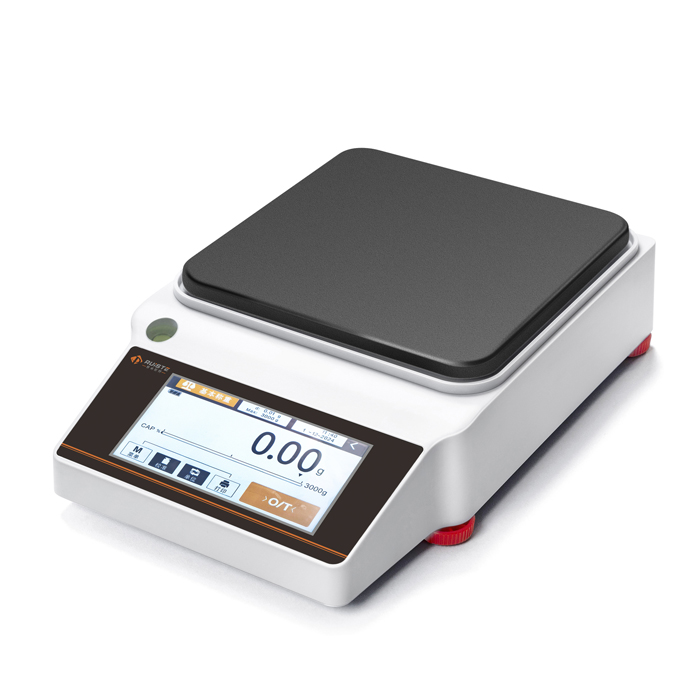
Industrial analytical balances stand out from standard weighing devices due to their exceptional sensitivity and precision tailored for fine industrial measurement tasks. Unlike ordinary scales that only handle rough mass estimation, these instruments are engineered to capture minute weight variations that are invisible to conventional weighing equipment. Their core design focuses on eliminating subtle external interferences and optimizing internal sensing mechanisms, making them indispensable for scenarios where even the smallest mass deviation can alter final results. From raw material inspection to finished product verification, they provide consistent and trustworthy mass data to underpin standardized industrial operations and rigorous experimental research.
The core working mechanism of modern industrial analytical balances relies on advanced electromagnetic force compensation technology, which replaces the traditional mechanical lever and counterweight structure of old weighing tools. When a sample is placed on the weighing pan, the instrument’s high-sensitivity position sensor detects slight displacement caused by the sample’s gravitational force. The internal electromagnetic coil then generates a precise opposing force to restore the pan to its original balanced position. The electric current required to produce this balancing force is directly proportional to the sample’s mass, and the system converts this electrical signal into a clear, accurate digital mass reading for users.
Structural design details are critical to the superior performance of industrial analytical balances, with every component optimized for precision and stability. A transparent draft shield encloses the entire weighing area, effectively blocking ambient air currents, dust particles, and airborne impurities that could disrupt delicate measurements. The weighing pan is crafted from durable, corrosion-resistant materials to prevent surface deformation or chemical reactions that might compromise accuracy during repeated use. Internal precision sensors and circuit modules are shielded from electromagnetic interference, ensuring stable signal conversion even in complex industrial working environments.
Temperature stability is another key factor that industrial analytical balances are designed to regulate rigorously. Fluctuations in ambient temperature can cause minor thermal expansion or contraction of internal components, which may lead to subtle measurement errors over time. Most advanced models are equipped with built-in temperature compensation systems that monitor real-time environmental temperature changes. The system automatically adjusts internal calculation parameters to offset thermal impacts, maintaining consistent measurement accuracy in fluctuating indoor and industrial workshop temperature conditions throughout long-duration operations.
Regular calibration is essential to sustain the long-term accuracy and reliability of industrial analytical balances. Continuous daily use, minor mechanical vibration, and long-term component aging can gradually cause slight deviations in measurement results. Routine calibration corrects these subtle offsets and resets the instrument’s internal reference benchmark to ensure every weighing result remains consistent. Many modern devices support automatic internal calibration functions, while manual calibration options are also available to adapt to different usage frequencies and environmental conditions, simplifying daily maintenance workflows.
Industrial analytical balances serve a wide spectrum of professional applications spanning multiple industrial and scientific sectors. In chemical processing, they are used to weigh trace reagents and raw materials to ensure the accuracy of chemical formulations and reaction ratios. In material science, researchers utilize these balances to measure tiny mass changes during material synthesis, degradation, or performance testing, supporting the development of new high-precision materials. They also play a vital role in fine chemical production and micro-component manufacturing where precise mass control is mandatory.
The pharmaceutical industry relies heavily on industrial analytical balances for standardized production and research processes. In drug formulation development, precise weighing of active pharmaceutical ingredients and auxiliary materials ensures the uniformity and efficacy of finished drugs. During quality inspection of pharmaceutical products, the instruments verify the net weight and component proportion of micro-dose preparations, eliminating unqualified products caused by mass discrepancies. Their high precision effectively guarantees the safety and stability of pharmaceutical products for end users.
For forensic testing and environmental analysis fields, industrial analytical balances provide critical data support for rigorous detection work. Environmental laboratories use them to weigh trace sediment, pollutant, and water sample residues, enabling accurate quantitative analysis of environmental pollutant concentrations. Forensic laboratories depend on their ultra-precise measurement capability to analyze tiny evidence samples, providing objective and reliable mass data for case investigation and result verification. These scenarios all require the high sensitivity that only professional analytical balances can deliver.
Modern industrial analytical balances integrate intelligent digital functions to enhance operational efficiency and data management. Most models feature high-definition digital displays that present real-time weighing data clearly, with intuitive interfaces that reduce operational errors. Built-in data recording and storage functions automatically save historical weighing records, facilitating subsequent data sorting, review, and statistical analysis. Meanwhile, external data transmission interfaces allow connection with peripheral data systems, realizing seamless data transmission and intelligent industrial data management.
Proper daily maintenance directly extends the service life and preserves the measurement performance of industrial analytical balances. Users should keep the weighing chamber and draft shield clean at all times, promptly removing residual sample dust and stains to avoid affecting sensor sensitivity. The instrument should be placed on a stable, horizontal platform away from strong vibration, direct sunlight, and intense electromagnetic radiation. Regular dust removal of internal components and periodic functional checks can prevent mechanical and signal failures caused by long-term accumulation of impurities.
Operational standardization is crucial to maximizing the performance of industrial analytical balances and avoiding human-induced errors. Before use, users need to preheat the instrument sufficiently to stabilize internal electronic components and sensor systems. Samples should be placed steadily in the center of the weighing pan to prevent eccentric placement from causing unbalanced force and inaccurate readings. It is also necessary to avoid placing overloaded samples or corrosive substances directly on the pan to protect the instrument’s structural and functional integrity.
As industrial manufacturing and scientific research continue to pursue higher precision standards, industrial analytical balances keep evolving in performance and functionality. Ongoing technological upgrades further improve their measurement sensitivity, anti-interference ability, and environmental adaptability, enabling them to adapt to more complex and rigorous precision measurement scenarios. As core precision measuring equipment, they will remain a fundamental guarantee for quality control, technological innovation, and standardized production across various high-precision industrial and scientific fields.
Pruiste supply precision balance,analytical balance,laboratory balance,moisture analyzer,digital viscometer,weighing scale,counting scale for sale, wholesale and custom fabrication. we are a professional manufacturer and supplier of electronic balance in china.
 Chinese Mobile
 Whatsapp Service
 WeChat Service


