

 Language
Industrial counting scales are precision weighing devices that calculate item quantities by measuring bulk weight and average single-piece weight. They replace manual counting errors, streamline industrial inventory and production workflows, and deliver fast, reliable, high-efficiency counting for identical small to medium-sized parts.
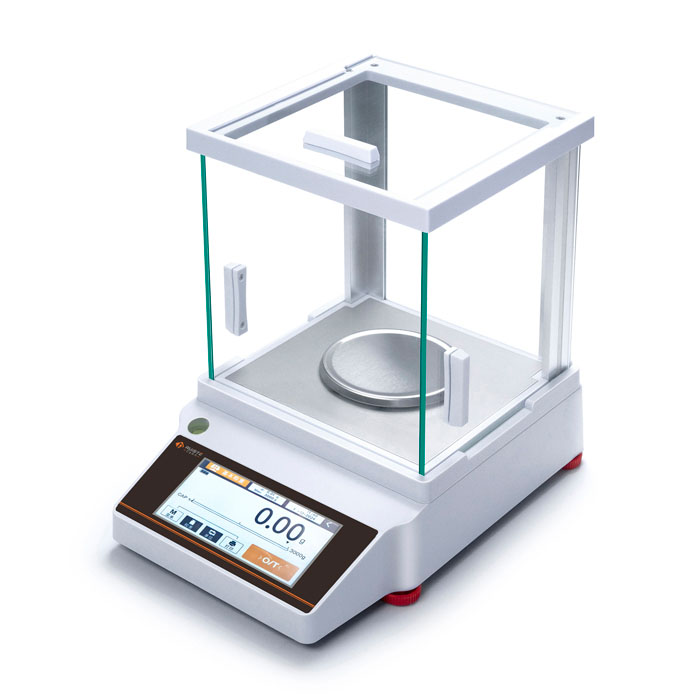
Unlike standard industrial scales that only display total weight, industrial counting scales are engineered to bridge weight measurement and quantity calculation, serving as essential tools for batch item management in modern industrial operations. Their core operational logic relies on consistent weight characteristics of homogeneous items, eliminating the tedious and error-prone nature of manual piece counting. For manufacturing and logistics scenarios involving massive identical parts, these devices transform raw weight data into accurate quantity figures, laying a solid foundation for standardized operational management. Even for items with tiny individual mass, the equipment maintains stable counting performance and avoids the human errors that often plague manual tallying.
The working mechanism of industrial counting scales follows a systematic and precise process centered on average piece weight calculation. Operators first place a small, known number of sample items on the weighing platform, allowing the device to capture the sample’s total weight and automatically compute the average weight of a single piece. After completing sample calibration, users can load bulk identical items onto the platform, and the scale instantly divides the total bulk weight by the pre-calculated single-piece average weight to output an accurate item count. Most models support automatic tare adjustment, which deducts the weight of containers, packaging trays or other accessories to ensure pure item weight measurement and further enhance counting precision.
Precision and stability are the core competitive advantages of professional industrial counting scales, distinguishing them from ordinary household or commercial weighing tools. Equipped with high-sensitivity sensing components, these scales can capture subtle weight changes of tiny parts, effectively reducing counting deviations caused by minor individual weight differences of mass-produced items. Many advanced versions feature real-time average weight updating, which continuously optimizes the single-piece weight data during continuous counting operations. This dynamic calibration function adapts to slight weight fluctuations in batch production parts, ensuring long-term counting accuracy even during prolonged, uninterrupted working hours.
Operational simplicity makes industrial counting scales highly adaptable to diverse industrial working environments and operator groups. The device is designed with intuitive keypad layouts and clear digital display screens, enabling workers to master basic operations through simple training without professional technical backgrounds. The overall workflow is highly streamlined: sample weighing, parameter confirmation and bulk counting can be completed in just a few simple steps. This user-friendly design greatly shortens operation time, improves overall working efficiency, and effectively reduces labor costs associated with manual counting and data recording in industrial sites.
Industrial counting scales boast extremely wide application coverage, penetrating multiple core links of manufacturing, warehousing and distribution industries. In electronic component manufacturing, they are widely used for counting small parts such as resistors, capacitors and connectors to ensure accurate material batching and product assembly. In hardware and machinery production, the scales count standard fasteners, small accessories and precision mechanical parts, supporting standardized production and quality inspection processes. In logistics and warehousing sectors, they assist in inventory sorting, stocktaking and batch packaging, solving the pain point of inefficient counting of bulk homogeneous goods.
The application of industrial counting scales greatly optimizes enterprise operational efficiency and reduces comprehensive operational risks. Traditional manual counting requires a large amount of repetitive labor, and long-term manual work easily leads to visual fatigue and counting mistakes, resulting in inaccurate inventory data, mismatched material batching and even production delays. Industrial counting scales complete batch counting in seconds, far exceeding manual counting speed while maintaining stable accuracy. They eliminate human-induced counting errors, ensure consistent data accuracy in production batching, inventory management and outbound inspection, and help enterprises maintain standardized and orderly operational processes.
Durability and environmental adaptability are key design features of industrial-grade counting scales tailored for harsh factory environments. Different from delicate laboratory weighing equipment, these scales adopt robust structural materials and dust-proof, anti-corrosion and anti-vibration designs. They can stably operate in environments with dust, slight vibration and variable temperature, which are common in production workshops and warehouses. The high-strength weighing platform resists daily friction and impact from frequent loading and unloading of goods, ensuring long-term stable operation and extending service life in high-frequency industrial working scenarios.
Modern industrial counting scales integrate intelligent functional designs to meet diversified industrial management needs. Beyond basic counting and weighing functions, most devices support real-time data display and temporary data storage, facilitating workers to record and sort counting results on site. Some optimized models feature data reset, cumulative counting and batch counting functions, which can统计 multiple batches of goods in a single operation and summarize total quantities. These intelligent functions effectively adapt to complex industrial statistical scenarios, simplify subsequent data sorting and analysis work, and improve the refinement of enterprise material management.
The popularization of industrial counting scales promotes the standardized and intelligent upgrading of industrial fine management. In the past, many small and medium-sized manufacturing enterprises relied on manual experience for material counting and inventory management, leading to unstable data accuracy and difficult standardized management. With the assistance of industrial counting scales, all counting data is quantified and standardized, providing reliable data support for enterprise production scheduling, material procurement, inventory control and cost accounting. This quantitative management mode helps enterprises optimize resource allocation, reduce material waste and improve overall operational benefits.
In terms of daily maintenance, industrial counting scales feature low maintenance costs and simple maintenance procedures, suitable for long-term industrial use. Regular surface cleaning of the weighing platform and regular zero-point calibration are sufficient to maintain stable working accuracy. The mature sensing and operational components have low failure rates, avoiding frequent equipment maintenance and shutdown maintenance. This low-maintenance characteristic ensures the continuity of industrial production and inventory work, reduces equipment operation and maintenance costs, and brings stable and lasting value to enterprise production and management.
As industrial production and logistics management continue to develop toward refinement and high efficiency, industrial counting scales have become indispensable basic industrial equipment. Their perfect combination of high precision, high efficiency, simple operation and strong environmental adaptability solves various counting pain points in industrial batch management. In the future, with the continuous upgrading of industrial intelligent technology, industrial counting scales will integrate more intelligent data interaction and linkage functions, further empowering enterprises to achieve more efficient and accurate fine-grained operational management.
Pruiste supply precision balance,analytical balance,laboratory balance,moisture analyzer,digital viscometer,weighing scale,counting scale for sale, wholesale and custom fabrication. we are a professional manufacturer and supplier of electronic balance in china.
 Chinese Mobile
 Whatsapp Service
 WeChat Service


