

 Language
Industrial laboratory balances are high-precision weighing instruments designed for accurate mass measurement in scientific research and industrial testing. Featuring advanced sensing and digital technology, they deliver reliable, consistent readings for precise lab and manufacturing analytical workflows.
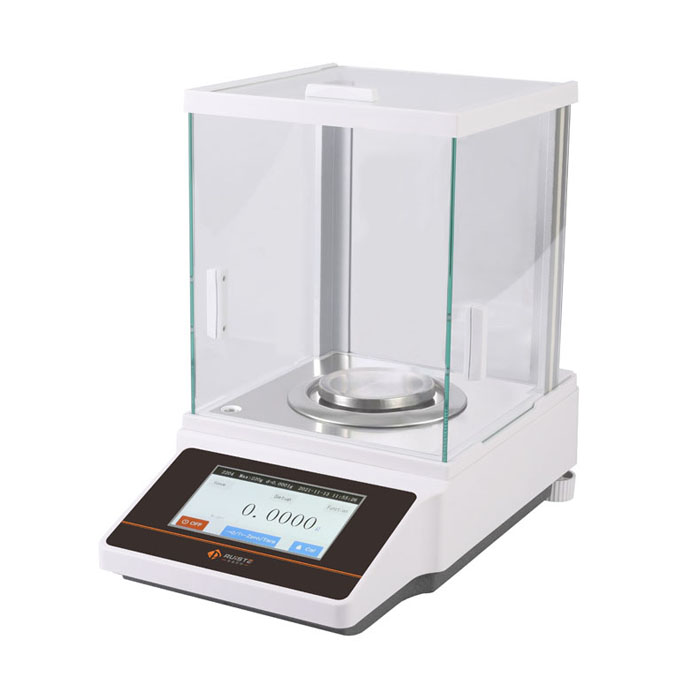
Industrial laboratory balances stand out from conventional weighing tools due to their exceptional precision and stable operational performance, which makes them indispensable in rigorous laboratory and industrial environments. Unlike basic mechanical scales that rely on manual weight comparison and are prone to human error, modern industrial laboratory balances adopt sophisticated internal mechanisms to minimize measurement deviations. These instruments are engineered to detect extremely subtle changes in mass, enabling accurate quantification of tiny sample quantities that ordinary weighing devices cannot capture. Their core design focuses on balancing sensitivity and stability, ensuring that every measurement result remains trustworthy even during long-duration continuous operation in busy laboratory settings.
The core working mechanism of most contemporary industrial laboratory balances centers on electromagnetic force compensation technology, a sophisticated principle that underpins their high accuracy. When a sample is placed on the weighing pan, it exerts a downward gravitational force that slightly shifts the pan from its balanced position. Internal sensors instantly detect this minor displacement and transmit electrical signals to the built-in microprocessor. The system then generates a precise electromagnetic counterforce to restore the pan to its original equilibrium state. The magnitude of the electric current required to produce this balancing force is directly proportional to the sample’s mass, and the microprocessor converts this current data into a clear, digital mass reading for users.
Structural design is a key factor that guarantees the stable and accurate operation of industrial laboratory balances. These devices feature a rigid, anti-vibration base that effectively isolates external mechanical disturbances, such as table shaking and ground vibration, which could disrupt measurement precision. The weighing pan is crafted from corrosion-resistant, high-strength materials to withstand long-term contact with various chemical samples and daily wear without deformation. Most models are equipped with transparent wind shields to block airflow interference, as even gentle air movement can skew readings of ultra-light samples. All internal components are precisely calibrated and sealed to prevent dust, moisture, and chemical fumes from affecting sensor sensitivity.
Industrial laboratory balances serve a wide spectrum of application scenarios spanning scientific research, industrial production, and quality inspection fields. In chemical laboratories, they are widely used to weigh raw materials for solution preparation, reagent formulation, and chemical reaction experiments, where accurate mass ratios directly determine experimental validity. In pharmaceutical research and production, these balances ensure precise dosing of active ingredients and auxiliary materials, laying a foundation for consistent product quality. Material science laboratories rely on them to measure tiny mass changes during material testing, aging experiments, and component analysis of new materials.
Daily operational standardization is critical to maintaining the long-term accuracy and service life of industrial laboratory balances. Before each use, users need to place the instrument on a completely horizontal surface to avoid measurement errors caused by tilting. It is essential to preheat the device for a certain period to stabilize internal electronic components and sensor performance, eliminating drift in initial readings. Samples to be weighed should be placed gently on the center of the pan to prevent eccentric load that may cause unbalanced force and inaccurate data. Users should also avoid placing overly hot or cold samples directly on the pan, as extreme temperatures can interfere with internal electromagnetic systems.
Regular routine maintenance is essential to preserve the optimal working condition of industrial laboratory balances. Daily cleaning involves gently wiping the weighing pan and wind shield with soft, dry cloths to remove residual sample dust and debris; stubborn stains can be cleaned with mild neutral detergents without corrosive ingredients. It is necessary to keep the instrument’s working environment dry and clean, avoiding high humidity, high temperature, and dusty conditions that may damage internal circuits and sensors. Regular manual calibration is also required to correct minor system deviations accumulated from long-term use and ensure consistent measurement accuracy.
Environmental factors exert a profound influence on the measurement performance of industrial laboratory balances, requiring strict environmental control during operation. Airflow from air conditioners, fans, or open windows can create unstable pressure on the weighing pan, leading to fluctuating readings, so enclosed wind shields must be used during precision measurement. Temperature fluctuations cause thermal expansion and contraction of internal components, which may alter sensor sensitivity and mechanical balance. Additionally, electromagnetic interference from nearby electronic equipment can disrupt the balance’s signal transmission, so the instrument should be placed away from high-power electrical devices.
Modern industrial laboratory balances integrate intelligent digital functions that greatly enhance operational efficiency and user convenience. Most devices are equipped with high-definition digital display screens that present real-time mass readings with clear, legible digits, eliminating the visual errors of traditional pointer scales. Built-in intelligent systems support multiple practical functions, including zero-point tracking, tare weighing, and data memory. The tare function allows users to automatically deduct the mass of containers such as beakers and weighing papers, directly obtaining the net mass of samples and simplifying repetitive weighing operations.
Data management and output capabilities make industrial laboratory balances highly adaptable to standardized industrial and laboratory workflows. Many models support real-time data recording and can store dozens or even hundreds of recent weighing records, facilitating subsequent data review, experimental analysis, and quality tracing. Some devices are compatible with external data transmission interfaces, enabling seamless connection with computers and laboratory management systems. This allows automatic upload and sorting of weighing data, reducing manual recording errors and improving the overall standardization and efficiency of laboratory data management.
Compared with traditional mechanical weighing equipment, industrial laboratory balances have obvious advantages in precision, efficiency, and operational stability. Mechanical balances require manual adjustment of weights and visual judgment of balance status, which is time-consuming and highly dependent on operator experience. In contrast, electronic industrial laboratory balances deliver instant, accurate readings with simple operations, effectively reducing human-induced errors. Their high sensitivity enables the measurement of microgram-level tiny samples, meeting the increasingly refined testing and research demands of modern industries and scientific fields.
With the continuous advancement of electronic and sensor technology, industrial laboratory balances are evolving toward higher precision, smarter functions, and stronger environmental adaptability. Upgraded sensor modules further improve detection sensitivity and anti-interference ability, ensuring stable operation in more complex laboratory environments. Intelligent algorithm optimization effectively reduces data drift and improves the repeatability of measurement results. These technological improvements enable industrial laboratory balances to better support high-precision scientific research, strict industrial quality control, and refined experimental analysis, becoming a core foundational tool in modern laboratory systems.
Pruiste supply precision balance,analytical balance,laboratory balance,moisture analyzer,digital viscometer,weighing scale,counting scale for sale, wholesale and custom fabrication. we are a professional manufacturer and supplier of electronic balance in china.
 Chinese Mobile
 Whatsapp Service
 WeChat Service


