

 Language
In the realm of scientific research and industrial quality control, precision is the cornerstone of reliable results. Among the myriad of instruments that enable this precision, the laboratory analytical balance stands out as a fundamental tool. Designed to measure mass with exceptional accuracy, this instrument is indispensable in fields ranging from chemistry and biology to pharmaceuticals and materials science. Unlike standard balances, analytical balances are engineered to detect minute differences in mass, often down to the microgram or even nanogram level. Their ability to provide precise measurements underpins countless experiments, quality assurance protocols, and scientific discoveries.
To understand the value of analytical balances, it is first crucial to distinguish them from other types of weighing equipment. Everyday balances, such as those used in kitchens or general laboratories, typically offer accuracy to the milligram level at best. In contrast, analytical balances are optimized for much higher precision, with readability ranging from 0.1 microgram (μg) to 1 milligram (mg). This level of precision is achieved through advanced mechanical and electronic design, which minimizes external interferences and maximizes sensitivity. The core function of an analytical balance is to measure the gravitational force exerted on an object, converting this force into a mass reading. However, unlike a simple spring balance that directly measures force, analytical balances use a comparator approach—comparing the mass of the sample to the mass of known reference weights. This comparative method is far more accurate, as it reduces the impact of environmental factors and mechanical drift that can affect direct force measurements.
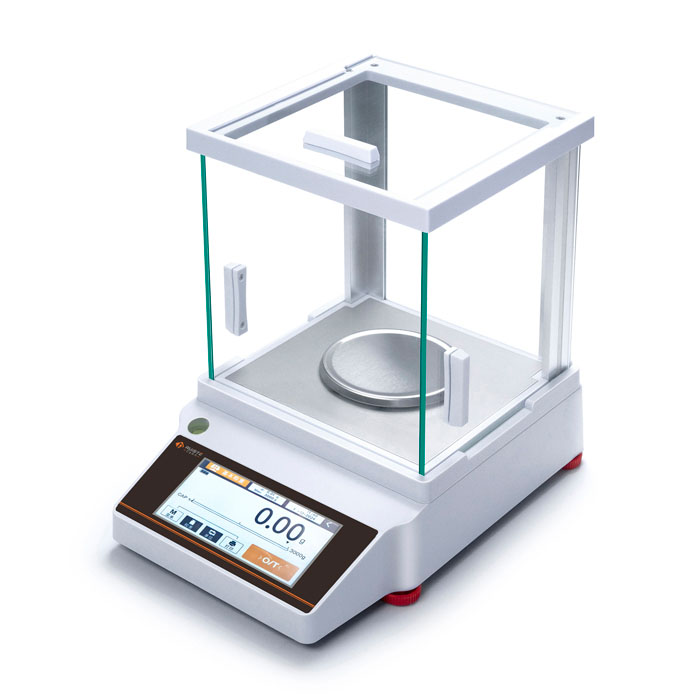
The working principle of modern analytical balances can be traced back to the classic beam balance, but contemporary models have evolved significantly with the integration of electronic technology. Most modern analytical balances are electronic, utilizing a load cell or a electromagnetic force restoration (EMFR) system. The EMFR system, in particular, is widely regarded as the gold standard for high-precision weighing. This system operates on the principle of counteracting the gravitational force of the sample with an electromagnetic force. When a sample is placed on the weighing pan, the pan deflects slightly. This deflection is detected by a photoelectric sensor, which sends a signal to a feedback circuit. The circuit then generates an electromagnetic force in a coil situated between permanent magnets, pulling the pan back to its original position. The magnitude of the current required to restore the pan to equilibrium is directly proportional to the mass of the sample. This current is then converted into a digital mass reading, which is displayed on the balance’s screen. The EMFR design offers several advantages, including high sensitivity, rapid response times, and the ability to compensate for minor environmental fluctuations.
Regardless of the underlying technology, all analytical balances consist of several key components that work together to ensure precision. The weighing pan is the most visible component, where the sample is placed. It is typically made of corrosion-resistant materials such as stainless steel or aluminum to prevent chemical reactions with samples and ensure durability. The pan is mounted on a rigid structure that minimizes vibration and deflection. Surrounding the weighing pan is a draft shield, a critical component that protects the sample from air currents, dust, and temperature changes. Air currents, even subtle ones, can cause significant errors in high-precision measurements, as they exert variable forces on the weighing pan. Draft shields are usually made of transparent glass or plastic, allowing the user to view the sample while maintaining a controlled environment inside. Some advanced models feature automatic draft shield doors, which open and close at the touch of a button to further reduce human-induced disturbances.
Another essential component is the reference weight system, which is integral to the comparative weighing process. In mechanical analytical balances, this system consists of a set of calibrated weights that are manually added to the opposite side of the beam to balance the sample. In electronic models, the reference is often internal and electronic, but some high-end balances still include external calibrated weights for verification purposes. The weighing mechanism, whether mechanical or electronic, is housed within a sturdy base that provides stability. The base may include leveling feet, which allow the user to adjust the balance to ensure it is perfectly horizontal—an important factor in accurate weighing, as an uneven surface can cause the weighing mechanism to function improperly. Finally, the control panel and display enable user interaction, allowing for functions such as tare (zeroing the balance with a container), unit conversion (between grams, milligrams, micrograms, etc.), and data logging.
The applications of laboratory analytical balances are vast and diverse, spanning numerous scientific and industrial sectors. In the field of chemistry, analytical balances are used for preparing standard solutions, which require precise concentrations of reagents. For example, in titration experiments, the accuracy of the reagent mass directly affects the calculation of the analyte concentration. In organic chemistry, weighing small quantities of catalysts or reactants is critical for controlling reaction rates and yields. In biology and biochemistry, analytical balances are used to measure samples such as DNA, proteins, and cell cultures. For instance, in protein purification processes, the mass of the purified protein is measured to determine the yield and purity of the final product. In microbiology, the mass of microbial cultures is used to monitor growth rates and metabolic activity.
The pharmaceutical industry relies heavily on analytical balances to ensure the quality and safety of drugs. During drug development, precise measurements of active pharmaceutical ingredients (APIs) and excipients are essential to maintain consistent formulation. In quality control, analytical balances are used to test the uniformity of dosage forms, such as tablets and capsules, ensuring that each unit contains the correct amount of the active ingredient. This is critical for complying with regulatory requirements and ensuring that drugs are effective and safe for patients. In materials science, analytical balances are used to characterize materials properties, such as density and porosity. For example, measuring the mass of a material before and after immersion in a liquid allows for the calculation of its density with high precision. In environmental science, analytical balances are used to measure soil, water, and air samples to detect contaminants and monitor environmental quality. For instance, the mass of particulate matter in air samples can be measured to assess air pollution levels.
Despite their advanced design, analytical balances are highly sensitive to environmental factors and user error, which can compromise the accuracy of measurements. Therefore, following best practices for use is essential to ensure reliable results. One of the most important considerations is the location of the balance. Analytical balances should be placed in a stable, vibration-free environment away from sources of heat, cold, and moisture. Direct sunlight should be avoided, as it can cause temperature fluctuations that affect the weighing mechanism. The balance should also be placed away from high-traffic areas, as foot traffic can generate vibrations that interfere with measurements. Additionally, the area around the balance should be clean and free of dust, which can contaminate samples and accumulate on the weighing pan and mechanism.
Proper sample handling is another key factor in accurate weighing. Samples should be brought to room temperature before weighing, as temperature differences between the sample and the balance can cause air currents inside the draft shield (due to convection) and affect the measurement. This is particularly important for samples stored in refrigerators or ovens. Samples should be placed in a clean, dry container to prevent direct contact with the weighing pan, which can cause contamination or chemical reactions. The tare function should be used to zero the balance after placing the container on the pan, ensuring that only the mass of the sample is measured. When placing or removing samples, users should avoid touching the weighing pan or container with their hands, as oils and moisture from the skin can add to the mass. Tweezers, gloves, or spatulas should be used instead. It is also important to avoid overloading the balance, as this can damage the weighing mechanism and reduce its precision over time. Users should always check the maximum capacity of the balance before weighing a sample.
Regular calibration and verification are essential to maintain the accuracy of analytical balances. Calibration involves adjusting the balance to ensure that its readings correspond to known reference weights. This process should be performed at regular intervals, as specified by the manufacturer or laboratory quality control protocols. In some cases, calibration may be required more frequently if the balance is used heavily or if the environmental conditions are unstable. Verification, on the other hand, involves checking the balance’s accuracy without making adjustments, to ensure that it is still performing within acceptable limits. Both calibration and verification should be performed using certified reference weights that meet international standards. It is also important to keep detailed records of all calibration and verification activities, as this is a requirement for many laboratory accreditation programs.
Proper maintenance is crucial for extending the lifespan of analytical balances and ensuring consistent performance. Daily maintenance tasks include cleaning the weighing pan and draft shield with a soft, dry cloth or a brush to remove any dust or sample residue. If the pan becomes contaminated with chemicals, it should be cleaned with a mild detergent and rinsed thoroughly with distilled water, then dried completely before use. The exterior of the balance can be cleaned with a damp cloth. It is important to avoid using abrasive cleaners or solvents, as they can damage the balance’s surfaces and components. The leveling feet should be checked regularly to ensure the balance is horizontal. The draft shield doors should be inspected to ensure they close properly and seal tightly, as a loose seal can allow air currents to enter.
Long-term maintenance may involve replacing worn components, such as the weighing pan or draft shield glass, and having the balance serviced by a qualified technician. During servicing, the technician will inspect the internal components, such as the load cell or electromagnetic coil, and make any necessary adjustments or repairs. It is also important to store the balance properly when not in use. If the balance will not be used for an extended period, it should be covered with a dust cover and stored in a dry, temperature-controlled environment. The power should be disconnected to prevent electrical damage.
In recent years, technological advancements have led to significant improvements in analytical balance design and functionality. Modern balances often feature digital displays with high contrast for easy reading, and many include built-in data logging capabilities. This allows users to record and store measurement data electronically, reducing the risk of human error in data entry and facilitating data analysis. Some models also offer connectivity options, such as USB or Ethernet, enabling integration with laboratory information management systems (LIMS). This integration streamlines workflow and ensures that data is securely stored and easily accessible for regulatory compliance. Additionally, advances in sensor technology have improved the sensitivity and stability of analytical balances, allowing for even more precise measurements. Some high-end models also include features such as automatic temperature compensation, which adjusts for minor temperature fluctuations in the environment, further enhancing measurement accuracy.
Despite these advancements, the fundamental principles of analytical balance operation remain unchanged. The key to obtaining reliable results still lies in proper use, regular calibration, and meticulous maintenance. Regardless of how advanced the instrument is, it is only as accurate as the conditions in which it is used and the care with which it is maintained. Therefore, it is essential for laboratory personnel to receive proper training on the use and maintenance of analytical balances. Training should cover topics such as proper sample handling, environmental control, calibration procedures, and troubleshooting common issues.
In conclusion, laboratory analytical balances are indispensable tools in the scientific community, enabling precise mass measurements that are critical for research, quality control, and regulatory compliance. Their advanced design, which incorporates components such as draft shields, precise weighing mechanisms, and electronic feedback systems, allows for measurements of exceptional accuracy. The applications of analytical balances are diverse, spanning fields such as chemistry, biology, pharmaceuticals, materials science, and environmental science. To ensure reliable results, it is essential to follow best practices for use, including proper sample handling, environmental control, and regular calibration. Additionally, meticulous maintenance is crucial for extending the lifespan of the balance and maintaining its performance. As technology continues to advance, analytical balances will likely become even more precise and user-friendly, further enhancing their role in scientific discovery and industrial quality assurance. By understanding the principles, components, and best practices associated with analytical balances, laboratory personnel can maximize the value of this essential instrument and ensure the integrity of their work.
Pruiste supply precision balance,analytical balance,laboratory balance,moisture analyzer,digital viscometer,weighing scale,counting scale for sale, wholesale and custom fabrication. we are a professional manufacturer and supplier of electronic balance in china.
 Chinese Mobile
 Whatsapp Service
 WeChat Service


