

 Language
Electronic precision balances stand as foundational precision measuring instruments in modern scientific research, industrial production, and analytical testing fields, serving as indispensable tools for acquiring accurate mass data in micro and fine measurement scenarios. Unlike traditional mechanical balances that rely on lever balance and weight comparison for measurement, electronic precision balances integrate advanced electronic sensing technology, microprocessor control systems, and precision mechanical structures, realizing automated, rapid, and high-accuracy mass detection. The core value of this instrument lies in its ability to capture tiny mass changes that are imperceptible to conventional measuring equipment, providing reliable quantitative basis for experimental analysis, product development, quality inspection, and material research. With the continuous improvement of precision requirements in various industries, electronic precision balances have evolved from simple single-function weighing devices to intelligent, high-stability, and anti-interference precision testing equipment, covering measurement ranges from microgram level to kilogram level while maintaining consistent measurement accuracy, and have become a core supporting facility for the development of modern precision manufacturing and scientific research disciplines.
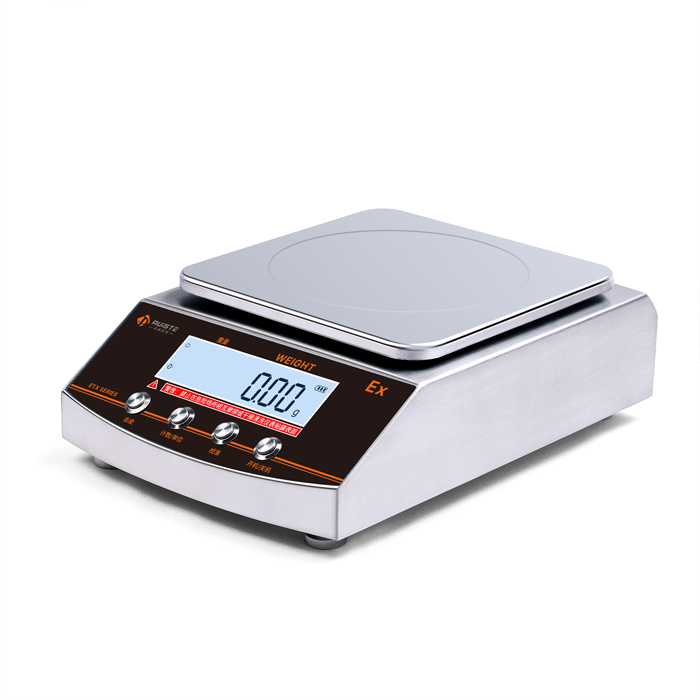
The working mechanism of electronic precision balances is mainly based on electromagnetic force compensation technology, which is the mainstream core principle of high-precision weighing equipment in the current market. The entire weighing process follows the basic physical law of force balance, converting the mechanical gravity generated by the sample mass into a measurable electrical signal through internal precision components. When a sample is stably placed on the weighing pan of the balance, the downward gravity will cause a slight displacement of the pan and the connected internal mechanical transmission structure. The high-sensitivity displacement sensor inside the instrument can instantly capture this tiny displacement signal and transmit it to the built-in microprocessor. The control system immediately outputs a corresponding current to the electromagnetic coil according to the displacement amplitude, generating an electromagnetic force opposite to the sample gravity to push the mechanical structure back to the initial balanced position. In this process, the current required to achieve electromagnetic force balance is strictly proportional to the mass of the sample, and the microprocessor converts the collected current signal into intuitive mass data through built-in algorithm processing, and finally displays it on the digital screen. This closed-loop compensation mechanism enables the balance to complete rapid balance adjustment and accurate measurement in a very short time, effectively avoiding the slow response and manual reading errors of traditional mechanical weighing methods.
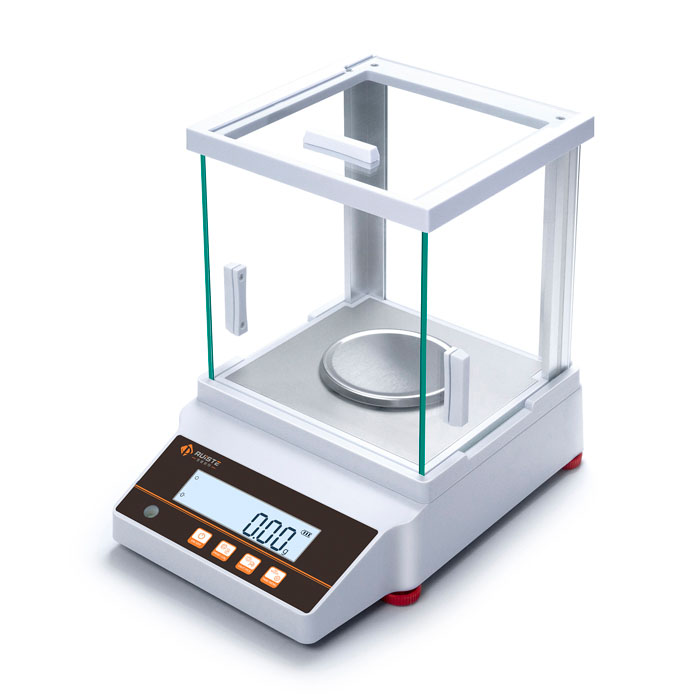
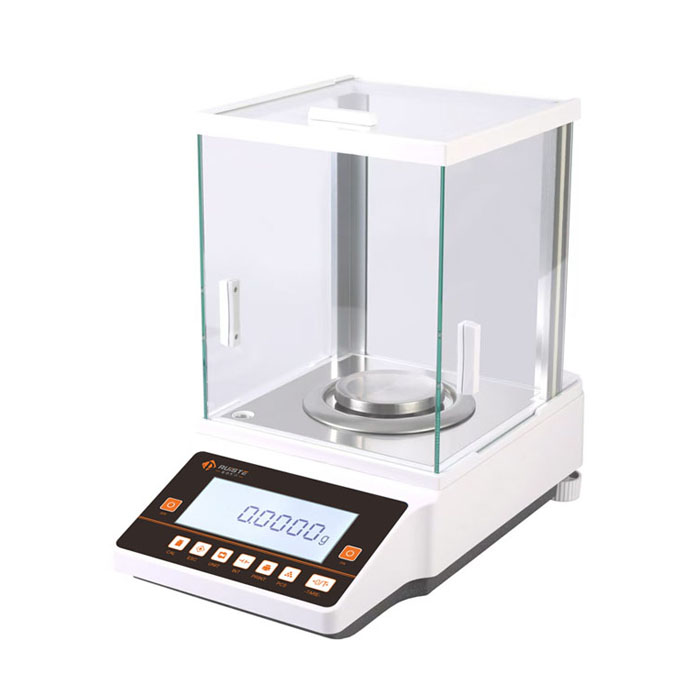
The internal structural design of electronic precision balances focuses on precision matching and anti-interference performance, and each component is optimized for high-accuracy measurement scenarios. The external part is mainly composed of a weighing pan, a windproof cover, and an operation display panel. The weighing pan is usually made of high-stability metal materials with uniform texture and strong corrosion resistance, which can ensure stable stress bearing and avoid mass deviation caused by material deformation. The windproof cover is a key structural component for high-precision measurement, which can isolate the interference of external air flow, convection, and tiny dust on the weighing process, especially suitable for microgram and milligram level fine measurement. The internal core structure includes electromagnetic force sensors, precision transmission mechanisms, high-sensitivity signal acquisition modules, and intelligent control chips. The electromagnetic force sensor is the core measuring component of the balance, with ultra-high sensitivity and linear response capability, which can accurately sense tiny force changes. The precision transmission mechanism adopts a low-friction structural design, minimizing mechanical resistance and hysteresis errors in the force transmission process. The signal acquisition module can filter and amplify weak electrical signals, ensuring the authenticity and stability of collected data, while the intelligent control chip undertakes data calculation, algorithm optimization, function switching, and parameter adjustment of the entire instrument.
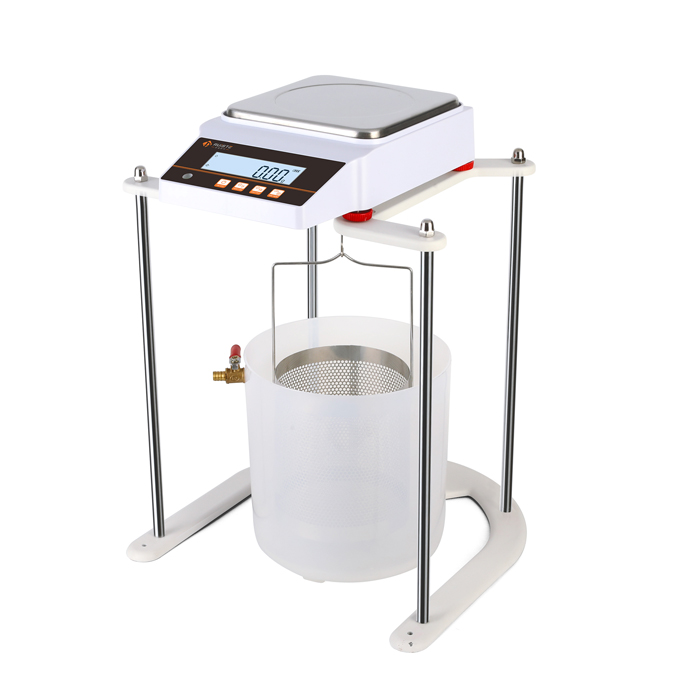
Modern electronic precision balances possess significant technical advantages over traditional mechanical balances and ordinary electronic weighing equipment, which are fully reflected in measurement accuracy, response speed, data stability, and functional diversity. In terms of accuracy performance, optimized electromagnetic compensation technology and high-precision signal processing algorithms enable the instrument to maintain ultra-low measurement error in full-range weighing, realizing accurate identification of tiny mass changes. In terms of response efficiency, the intelligent closed-loop control system can complete displacement sensing, force compensation, signal conversion, and data output within milliseconds, greatly shortening the weighing stabilization time and improving the efficiency of batch sample detection. In terms of data stability, the built-in temperature compensation module can automatically sense the ambient temperature change and adjust the internal electrical signal parameters in real time, avoiding measurement deviation caused by thermal expansion and contraction of components and temperature drift of circuits. In addition, electronic precision balances support automatic tare subtraction, zero tracking, data memory, and automatic calibration functions. The automatic tare function can eliminate the mass influence of containers, filter papers, and other auxiliary tools, realizing direct weighing of net sample mass; the zero tracking function can automatically correct tiny zero drift caused by environmental changes and mechanical vibration, ensuring the zero point stability of the instrument during long-term use.
Electronic precision balances have a wide range of application scenarios, covering multiple fields such as scientific research laboratories, industrial manufacturing, food testing, pharmaceutical research, and environmental monitoring. In academic and scientific research laboratories, they are used for precise sample weighing in chemical synthesis, material analysis, biological experiments, and physical property testing, providing accurate basic data for experimental formula configuration and result verification. In the industrial manufacturing field, precision balances are applied to precision parts detection, raw material ingredient proportioning, and finished product quality sampling inspection, meeting the strict mass accuracy requirements of precision manufacturing industries. In the food and beverage industry, the instrument is used for precise weighing of raw material ingredients, detection of trace additives, and quality difference inspection of finished products, ensuring the standardization and safety of food production. In the pharmaceutical industry, electronic precision balances undertake the weighing of pharmaceutical raw materials, trace reagent configuration, and drug sample testing, providing accurate data support for drug research and development, production process control, and drug quality evaluation. In environmental monitoring work, they are used for weighing filter membrane samples, sediment samples, and trace pollutant samples, realizing quantitative analysis of environmental pollutants and providing data basis for environmental quality assessment and pollution control.
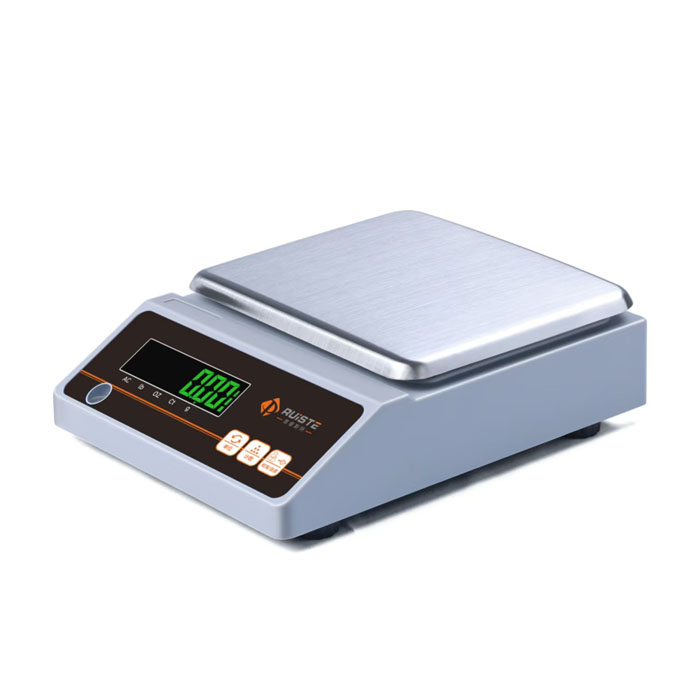
Standardized operation specifications are the key to ensuring the measurement accuracy and service life of electronic precision balances, and all operating steps need to be carried out in strict accordance with scientific procedures. Before formal use, it is necessary to place the balance on a horizontal, stable, and vibration-free work platform, and adjust the horizontal bubble calibration device to ensure the instrument is in a horizontal state, avoiding measurement errors caused by tilt stress deviation. It is essential to preheat the instrument for a specified period after startup, which can stabilize the internal circuit system and electromagnetic sensor performance and eliminate the measurement deviation caused by insufficient component temperature stability. Before sample weighing, the zero point of the instrument must be calibrated first, and the tare function should be used to deduct the mass of the bearing container to ensure the accuracy of net weighing data. During the weighing process, samples should be placed gently in the center of the weighing pan to avoid eccentric placement causing unbalanced stress and mechanical deformation of the pan. It is forbidden to place over-range, super-heavy, or corrosive samples on the weighing pan to prevent damage to internal precision sensors and structural components. After the data is stable and recorded, the sample should be taken out gently, and the weighing pan and windproof cover should be cleaned in time to keep the instrument clean and tidy.
Environmental conditions are crucial factors affecting the measurement performance of electronic precision balances, and subtle changes in the external environment may lead to data fluctuations and accuracy deviation. Temperature is the most core environmental influencing factor. Too high or too low ambient temperature will cause thermal expansion and contraction of internal metal structures and circuit components, changing the electromagnetic force balance state and signal transmission efficiency, resulting in measurement drift. Long-term operation in variable temperature environments will also accelerate the aging of precision components and reduce the service life of the instrument. Air humidity also has a significant impact on the balance performance. Excessively high air humidity will cause moisture adhesion on the circuit board and sensor surface, easily leading to signal short circuit, sensitive component failure, or data instability; excessively dry environment will generate static electricity, interfering with the transmission of weak electrical signals and affecting weighing accuracy. In addition, environmental vibration and air flow are important interference sources. Slight ground vibration or table vibration will cause continuous tiny displacement of the weighing pan, making it difficult for the instrument to stabilize data; indoor air convection, fan air supply, and personnel walking air flow will impact the micro-weighing state, especially for ultra-micro sample measurement. Therefore, the working environment of electronic precision balances needs to maintain constant temperature and humidity, static stability, and air flow isolation.
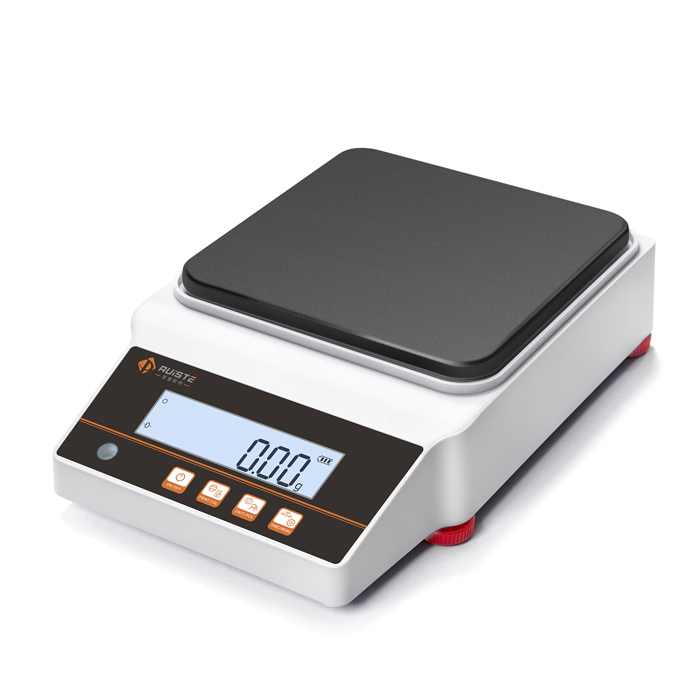
Regular calibration and professional maintenance are essential links to maintain the long-term accuracy and stable operation of electronic precision balances, and scientific maintenance management can effectively extend the service life of the instrument and reduce measurement failure rates. Instrument calibration is divided into automatic internal calibration and manual external calibration. The built-in automatic calibration program can independently complete parameter correction according to system settings, realizing real-time correction of daily tiny errors; regular manual external calibration needs to be completed with the help of standard calibration weights, which can systematically correct the overall deviation of the instrument after long-term use, eliminate zero drift and linear error, and restore the optimal measurement performance of the balance. In terms of daily maintenance, the surface of the weighing pan, windproof cover, and instrument shell should be cleaned regularly with soft dry tools to avoid the accumulation of dust, sample residues, and dirt, which may affect the flexibility of mechanical structures and the sensitivity of sensors. It is necessary to regularly check the tightness of internal structural parts and the stability of circuit connections to prevent data fluctuation caused by loose parts and poor contact. During idle periods, the instrument should be kept in a dry and dust-proof state, and the power supply should be cut off for long-term storage to avoid circuit aging caused by long-term standby. In addition, professional maintenance personnel should conduct regular comprehensive performance testing on the instrument, including sensor sensitivity, signal linearity, data stability, and fault self-checking functions, to discover and eliminate potential hidden dangers in time.
Error analysis and control technology is the core guarantee to improve the measurement accuracy of electronic precision balances, and all errors can be effectively controlled through targeted technical means and standardized management. The errors of electronic precision balances are mainly divided into systematic errors, random errors, and gross errors. Systematic errors are caused by inherent structural characteristics and parameter deviation of the instrument itself, including linear errors of sensors, temperature drift errors, and mechanical structural hysteresis errors. Such errors can be effectively eliminated through regular calibration, parameter optimization, and temperature compensation technology. Random errors are generated by accidental changes in the external environment, such as tiny air flow interference, slight vibration, and instantaneous fluctuation of power supply voltage, which can be reduced by improving the operating environment, increasing the data averaging times of the instrument, and adopting multiple measurements to take the average value. Gross errors are mainly caused by human improper operation, such as eccentric sample placement, non-horizontal instrument placement, incomplete preheating, and untimely zero calibration. Such errors can be completely avoided by standardizing operating procedures and improving operator professionalism. In addition, in the precise measurement process, selecting appropriate weighing containers, avoiding sample volatilization and adsorption, and controlling the weighing time can further reduce subtle measurement errors and improve the authenticity and repeatability of data.
With the continuous progress of electronic information technology and precision manufacturing technology, electronic precision balances have achieved continuous technological iteration and performance upgrading, realizing the transformation from single weighing function to intelligent and multi-functional comprehensive testing equipment. Early electronic precision balances only had basic weighing and digital display functions, with single performance, poor anti-interference ability, and limited environmental adaptability. Modern upgraded products integrate intelligent data processing systems, which can automatically complete data recording, sorting, storage, and export, and can be connected with external computer terminals and testing systems to realize automated data transmission and remote monitoring. At the same time, the anti-interference performance of the instrument has been greatly improved. Through optimized circuit shielding design and mechanical shock absorption structure, it can adapt to more complex working environments and maintain stable measurement accuracy in non-constant temperature and slight vibration environments. In addition, the new generation of electronic precision balances has added intelligent fault self-diagnosis function, which can automatically detect abnormal conditions such as sensor failure, circuit abnormality, and parameter deviation, and feed back fault information through the display screen, facilitating rapid troubleshooting and maintenance. The miniaturization and lightweight design of the instrument also make its application scenarios more extensive, realizing the transformation from single laboratory use to portable field detection and fixed precision measurement dual scenarios.
In the long-term use process of electronic precision balances, there are many common operational misunderstandings and usage hazards, which are important causes of reduced measurement accuracy and shortened instrument life. Many operators ignore the preheating link and start weighing directly after startup, resulting in unstable internal circuit and sensor performance, forming systematic measurement errors. Some users do not pay attention to horizontal calibration, and long-term tilted placement will cause asymmetric stress on the internal mechanical structure, leading to permanent structural deformation and irreversible accuracy deviation. In the sample placement process, frequent eccentric placement, excessive sample taking and placing speed, and collision with the weighing pan will cause impact damage to the precision sensor and affect the force balance sensitivity. In terms of daily maintenance, random wiping of the internal structure with wet tools, long-term accumulation of sample corrosive residues, and frequent switching of the instrument power supply will accelerate component aging and circuit damage. In addition, many users rely too much on automatic calibration and ignore regular manual professional calibration, resulting in long-term accumulation of instrument errors and gradual reduction of measurement credibility. Avoiding these common misunderstandings and forming standardized use and maintenance habits are crucial to maintaining the long-term stable performance of electronic precision balances.
Looking at the future development trend, electronic precision balances will further develop towards higher precision, stronger intelligence, better environmental adaptability, and wider application integration. With the breakthrough of micro-nano sensing technology and high-precision algorithm technology, the measurement accuracy of the instrument will be further improved, realizing more accurate detection of ultra-trace samples and providing more refined data support for cutting-edge scientific research such as micro-material research and molecular analysis. Intelligent technology will be more deeply integrated into the instrument system, realizing automatic environment adaptation, intelligent error correction, unattended automatic weighing, and full-process data traceability, greatly improving the automation level and detection efficiency of precision measurement. The anti-interference and environmental adaptation capabilities of the instrument will be further optimized, enabling stable and accurate measurement in complex environments such as variable temperature and humidity, slight vibration, and weak air flow, expanding the application scope in industrial field detection and outdoor environmental monitoring. At the same time, electronic precision balances will realize deeper integration with industrial Internet and laboratory intelligent management systems, forming a closed-loop system of weighing data collection, analysis, transmission, and application, providing more powerful basic technical support for the high-quality development of modern scientific research, precision manufacturing, and quality detection industries.
Pruiste supply precision balance,analytical balance,laboratory balance,moisture analyzer,digital viscometer,weighing scale,counting scale for sale, wholesale and custom fabrication. we are a professional manufacturer and supplier of electronic balance in china.
 Chinese Mobile
 Whatsapp Service
 WeChat Service


