

 Language
In the intricate ecosystem of modern industry, precision and accuracy stand as the cornerstones of operational excellence. From the production of micro-components for electronics to the formulation of chemical compounds for pharmaceuticals, the ability to measure mass with unparalleled precision directly impacts product quality, production efficiency, and overall operational sustainability. Among the array of precision measurement tools that have revolutionized industrial processes, the industrial electronic balance has emerged as an indispensable instrument. Unlike traditional mechanical balances, industrial electronic balances leverage advanced sensor technology and digital signal processing to deliver rapid, precise, and reliable mass measurements, adapting seamlessly to the diverse and demanding environments of industrial settings.
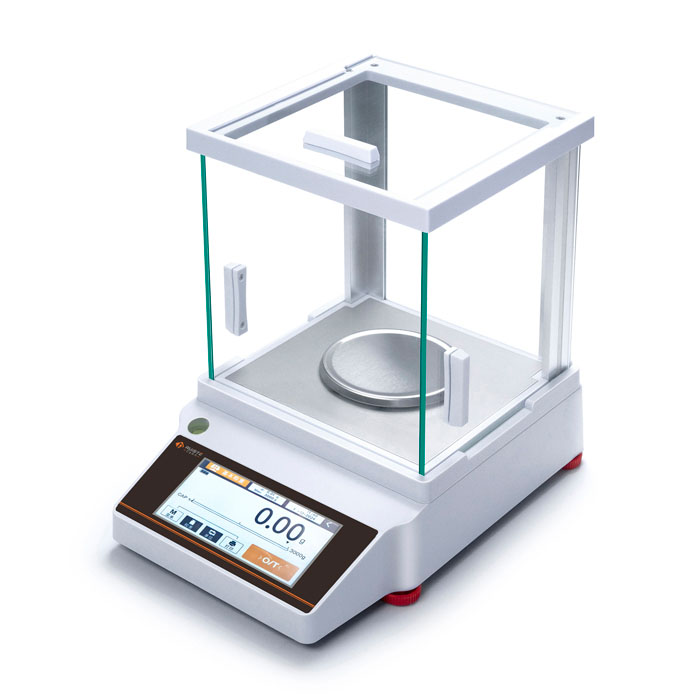
To comprehend the superiority of industrial electronic balances, it is essential to first explore their underlying working principles. At the heart of every industrial electronic balance lies a force sensor, typically a strain gauge load cell or a piezoelectric sensor, which converts the mechanical force exerted by the object being measured into an electrical signal. The strain gauge load cell, the most commonly used type in industrial applications, consists of a rigid metal structure bonded with thin, conductive strain gauges. When a load is placed on the balance pan, the metal structure deforms slightly, causing the strain gauges to stretch or compress. This deformation alters the electrical resistance of the strain gauges, which is then converted into a voltage signal by a Wheatstone bridge circuit integrated within the sensor. The voltage signal, which is proportional to the mass of the object, is subsequently amplified, filtered to remove environmental noise, and processed by a microcontroller. The microcontroller calibrates the signal based on pre-set reference values and converts it into a digital mass reading, which is displayed on the balance’s interface. Advanced models may also integrate additional features such as temperature compensation, which adjusts the measurement to account for fluctuations in ambient temperature, ensuring consistent accuracy even in variable industrial environments.
Compared to their mechanical predecessors, industrial electronic balances offer a multitude of advantages that make them ideally suited for industrial applications. One of the most prominent benefits is their exceptional precision and accuracy. Modern industrial electronic balances can achieve measurement resolutions ranging from 0.1 milligram to 1 gram, depending on the model, enabling precise measurement of both minute and large quantities. This level of precision is particularly critical in industries such as pharmaceuticals, where the dosage of active ingredients must be exact to ensure product efficacy and safety, and in electronics manufacturing, where the mass of micro-components directly affects their performance. Another key advantage is their speed and efficiency. Mechanical balances require manual adjustment and careful observation, which can be time-consuming, especially in high-volume production environments. In contrast, industrial electronic balances provide instant readings, reducing measurement time from minutes to seconds and significantly boosting production throughput. Additionally, electronic balances offer enhanced usability and data management capabilities. Most models feature intuitive digital interfaces with clear displays, simple calibration procedures, and the ability to store and transfer measurement data to computers or production management systems via USB, RS232, or wireless connections. This seamless data integration facilitates real-time monitoring of production processes, enables automated record-keeping, and supports compliance with quality control standards by providing traceable measurement data.
The versatility of industrial electronic balances has made them indispensable across a wide range of industrial sectors, each with unique measurement requirements and environmental challenges. In the pharmaceutical industry, for instance, electronic balances play a critical role in the formulation of drugs, where precise measurement of active pharmaceutical ingredients (APIs) and excipients is essential to ensure dosage accuracy and batch consistency. They are also used in the quality control of finished products, verifying the mass of tablets, capsules, and vials to ensure they meet regulatory specifications. The chemical industry relies heavily on industrial electronic balances for the accurate mixing of raw materials, where even minor deviations in mass can lead to chemical reactions that are inefficient, unsafe, or produce substandard products. In petrochemical plants, balances are used to measure the mass of chemical feedstocks and finished products, supporting process optimization and inventory management. The food and beverage industry also benefits significantly from electronic balances, particularly in the production of processed foods, beverages, and confectionery. Here, balances ensure that ingredients are added in the correct proportions, maintaining product consistency and flavor, and complying with labeling regulations regarding net weight. In the electronics industry, where miniaturization is a key trend, high-precision electronic balances are used to measure the mass of microchips, capacitors, and other small components, ensuring they meet the strict size and weight specifications required for electronic devices. Additionally, industrial electronic balances find applications in the automotive industry for measuring components such as engine parts and fasteners, in the aerospace industry for precision measurement of aircraft components, and in research and development laboratories for a wide range of experimental measurements.
Selecting the right industrial electronic balance for a specific application requires careful consideration of several key factors. First and foremost is the required precision and capacity. The balance must have a capacity that exceeds the maximum mass of the objects to be measured, while also offering a resolution that meets the application’s precision requirements. For example, a pharmaceutical laboratory measuring small quantities of APIs may require a balance with a capacity of 200 grams and a resolution of 0.1 milligrams, while a food production facility measuring large batches of ingredients may need a balance with a capacity of 50 kilograms and a resolution of 1 gram. Environmental conditions are another critical factor. Industrial environments may be exposed to dust, vibration, temperature fluctuations, and humidity, all of which can affect measurement accuracy. Balances designed for harsh environments should feature protective enclosures, vibration damping systems, and advanced temperature compensation to ensure reliable performance. Usability and data management features are also important considerations. For high-volume production lines, balances with automated feeding systems or integration capabilities with production equipment may be more efficient. Additionally, the ability to store and transfer data is essential for quality control and regulatory compliance. Finally, maintenance requirements and durability should be taken into account. Industrial electronic balances are subjected to frequent use, so selecting a model with a robust design and easy-to-replace components can reduce downtime and maintenance costs.
Proper maintenance is essential to ensure the long-term accuracy and reliability of industrial electronic balances. Regular calibration is perhaps the most important maintenance task. Calibration involves comparing the balance’s measurements to a known standard weight and adjusting the balance if necessary to ensure accuracy. The frequency of calibration depends on the application’s requirements, the frequency of use, and the environmental conditions, but it is typically recommended at least once every six months, or more frequently for critical applications. Daily maintenance practices include keeping the balance clean and free of debris. The pan and surrounding areas should be wiped down regularly with a soft, dry cloth to remove dust, spills, and other contaminants that can affect measurement accuracy. It is also important to inspect the balance for any signs of damage, such as cracks in the pan or loose components, and to address any issues promptly. Proper storage and handling are also crucial. When not in use, the balance should be covered to protect it from dust and moisture. It should be placed on a stable, level surface to minimize vibration and ensure accurate measurements. Additionally, avoiding overloading the balance beyond its capacity is essential to prevent damage to the load cell, which is the most sensitive and expensive component of the balance.
The evolution of industrial electronic balances has been driven by advancements in sensor technology, digital signal processing, and connectivity. In recent years, the integration of Internet of Things (IoT) technology has opened up new possibilities for industrial electronic balances, enabling remote monitoring and control. IoT-enabled balances can transmit measurement data in real-time to cloud-based platforms, allowing operators to monitor production processes from anywhere, identify trends, and make data-driven decisions. This connectivity also facilitates predictive maintenance, where data on the balance’s performance is analyzed to detect potential issues before they lead to downtime. Another emerging trend is the development of portable industrial electronic balances, which offer the same precision as stationary models but with greater flexibility. These portable balances are ideal for applications where measurements need to be taken at multiple locations, such as on-site inspections, field testing, or in large warehouses. Additionally, advancements in materials science have led to the development of lighter, more durable balances that can withstand even harsher industrial environments, further expanding their range of applications.
In conclusion, industrial electronic balances have become an integral part of modern manufacturing and quality control systems, offering unparalleled precision, efficiency, and versatility. Their ability to deliver rapid, accurate measurements in diverse industrial environments has transformed production processes across a wide range of sectors, from pharmaceuticals and chemicals to food and electronics. By ensuring the accuracy of mass measurements, industrial electronic balances contribute to improved product quality, increased production efficiency, and enhanced regulatory compliance. Selecting the right balance for a specific application, coupled with proper maintenance, is essential to maximize their performance and longevity. As technology continues to advance, the role of industrial electronic balances is set to become even more critical, with IoT integration, portability, and enhanced durability driving further innovations. In an era where precision and efficiency are paramount, industrial electronic balances will remain a cornerstone of industrial excellence, supporting the development of high-quality products and sustainable manufacturing practices.
Pruiste supply precision balance,analytical balance,laboratory balance,moisture analyzer,digital viscometer,weighing scale,counting scale for sale, wholesale and custom fabrication. we are a professional manufacturer and supplier of electronic balance in china.
 Chinese Mobile
 Whatsapp Service
 WeChat Service


