

 Language
In the intricate landscape of modern industry, where precision and consistency stand as the cornerstones of quality and efficiency, industrial precision balances have emerged as indispensable tools. These devices, designed to measure mass with exceptional accuracy, transcend the basic function of weighing to become integral components in a wide array of industrial processes. From the delicate assembly of electronic components to the large-scale production of pharmaceutical products, the role of industrial precision balances extends far beyond simple measurement, influencing product quality, operational efficiency, and even cost-effectiveness.
At the heart of industrial precision balances lies their ability to deliver accurate measurements across varying industrial environments. Unlike standard weighing scales, which prioritize capacity over precision, these balances are engineered to detect minute differences in mass, often with a readability of 0.1 milligram or better. This level of accuracy is not merely a technical feat but a necessity in industries where even the smallest deviation from specifications can lead to product failure, safety hazards, or financial losses. For instance, in the production of microchips, a tiny excess of a conductive material can render an entire batch of components useless. Similarly, in the food processing industry, precise measurement of ingredients is essential to maintain consistent taste, texture, and nutritional content, as well as to comply with regulatory requirements related to portion control.
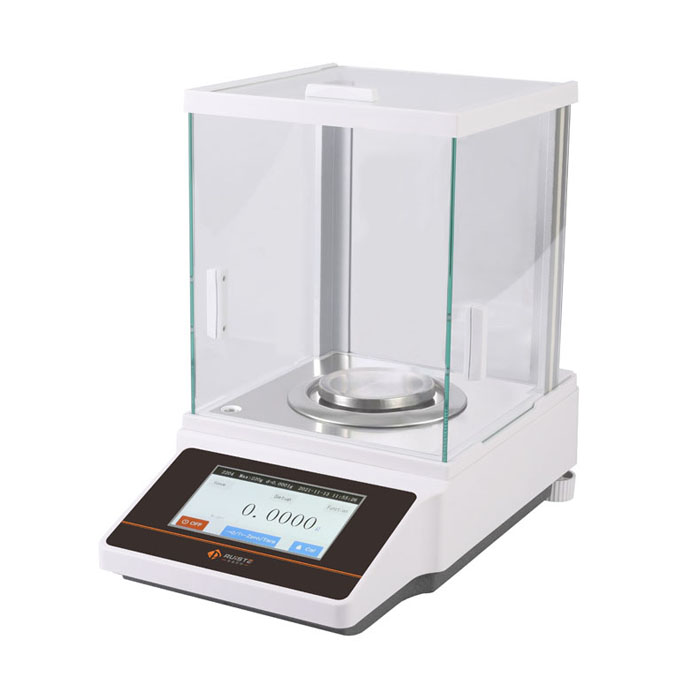
The design and construction of industrial precision balances are tailored to withstand the harsh conditions of industrial settings while preserving their accuracy. Industrial environments are often characterized by factors such as vibration, temperature fluctuations, dust, and humidity, all of which can interfere with measurement accuracy. To address these challenges, manufacturers of precision balances incorporate a range of specialized features. Vibration damping systems, for example, minimize the impact of mechanical vibrations from nearby machinery, ensuring that measurements remain stable. Temperature compensation technology adjusts for changes in ambient temperature, as variations in temperature can affect the performance of the balance’s internal components. Additionally, many precision balances feature sealed enclosures to protect sensitive parts from dust, moisture, and chemical contaminants, which are common in industries such as chemical processing and pharmaceuticals.
One of the most prominent applications of industrial precision balances is in the pharmaceutical and biotechnology sectors. In these industries, the accuracy of ingredient measurement is critical to ensuring the safety and efficacy of drugs and medical products. The active pharmaceutical ingredients (APIs) used in medications are often highly potent, meaning that even a small variation in their quantity can have significant implications for patient health. Precision balances are used at every stage of pharmaceutical production, from the weighing of raw materials to the final formulation of drugs. For example, during the synthesis of APIs, researchers and production personnel rely on precision balances to measure reactants in exact proportions, ensuring that chemical reactions proceed as intended. In the packaging phase, precision balances are used to verify the weight of each dosage form, such as tablets or capsules, to ensure that they contain the correct amount of the active ingredient. This level of precision is not only a matter of quality control but also a legal requirement, as regulatory bodies mandate strict adherence to dosage specifications.
The electronics industry is another sector where industrial precision balances play a vital role. As electronic devices continue to become smaller and more complex, the components used in their assembly are shrinking in size, requiring increasingly precise measurement. Precision balances are used to weigh components such as microchips, resistors, capacitors, and connectors, ensuring that they meet the exact mass specifications required for proper functionality. For example, in the production of smartphones, the tiny components that make up the camera module or the battery must be weighed with extreme accuracy to ensure that they fit within the device’s compact design and operate efficiently. Additionally, precision balances are used in the quality control of electronic components, helping to identify defective parts that may have irregular mass due to manufacturing flaws. This not only improves the reliability of electronic devices but also reduces the cost of production by minimizing the number of defective products that reach the market.
The chemical industry also relies heavily on industrial precision balances for a wide range of applications. Chemical reactions are highly dependent on the precise ratio of reactants, and even a small error in measurement can lead to undesirable products, incomplete reactions, or even hazardous conditions. Precision balances are used to weigh chemicals in research and development laboratories, where scientists are developing new materials and processes. In production facilities, these balances are used to measure raw materials before they are mixed, ensuring that the final product meets the required chemical composition. For example, in the production of plastics, the precise measurement of monomers, catalysts, and additives is essential to achieve the desired properties, such as strength, flexibility, and heat resistance. Additionally, precision balances are used in the handling of hazardous chemicals, where accurate measurement helps to minimize waste and reduce the risk of exposure to harmful substances.
The food and beverage industry is another major user of industrial precision balances. In this sector, precision measurement is essential to maintain product consistency, ensure food safety, and comply with labeling regulations. For example, in the production of baked goods, the precise measurement of flour, sugar, yeast, and other ingredients is critical to achieving the desired texture and flavor. In the beverage industry, precision balances are used to measure flavorings, sweeteners, and preservatives, ensuring that each batch of product has the same taste and quality. Additionally, precision balances are used in the packaging phase to verify the weight of food products, ensuring that they meet the net weight requirements specified on the label. This not only protects consumers from being short-changed but also helps manufacturers avoid legal penalties for non-compliance with labeling laws.
Technological advancements have significantly enhanced the performance and functionality of industrial precision balances in recent years. One of the most notable developments is the integration of digital technology, which has replaced traditional analog systems with digital displays and electronic components. Digital precision balances offer several advantages over their analog counterparts, including higher accuracy, easier readability, and the ability to store and process measurement data. Many modern precision balances are equipped with built-in data logging capabilities, allowing users to record and track measurement results over time. This is particularly useful in quality control applications, where traceability of measurement data is essential. Additionally, digital precision balances can be connected to computers and other devices via USB or Ethernet ports, enabling seamless integration with laboratory information management systems (LIMS) and other industrial software. This integration allows for automated data transfer, reducing the risk of human error and improving the efficiency of data analysis.
Another significant technological advancement is the development of electromagnetic force restoration (EMFR) technology, which has become the standard for high-precision balances. EMFR balances operate by using an electromagnetic force to counteract the weight of the object being measured. The balance’s internal sensor detects the displacement caused by the weight of the object, and the electromagnetic coil generates a force equal to the weight of the object to restore the sensor to its original position. The current required to generate this force is proportional to the weight of the object, allowing for highly accurate measurement. EMFR technology offers several advantages over traditional mechanical balances, including higher accuracy, faster response times, and greater stability. Additionally, EMFR balances are less susceptible to wear and tear than mechanical balances, making them more durable and reliable in industrial environments.
The integration of automation technology is another trend that is transforming the use of industrial precision balances. In modern manufacturing facilities, many processes are automated to improve efficiency and reduce human error. Precision balances are increasingly being integrated into automated production lines, where they work in conjunction with robotic arms, conveyors, and other automated equipment. For example, in the pharmaceutical industry, automated weighing systems use precision balances to weigh raw materials and transfer them to mixing vessels without human intervention. This not only improves the accuracy of measurement but also reduces the risk of contamination, as human contact with sensitive materials is minimized. Additionally, automated precision balances can operate continuously, increasing the throughput of production processes and reducing production time.
When selecting an industrial precision balance, there are several key factors that users must consider to ensure that the device meets their specific needs. The first and most important factor is the required level of accuracy and readability. Different industries and applications require different levels of precision, and users must select a balance that can deliver the necessary accuracy for their particular use case. For example, a pharmaceutical manufacturer may require a balance with a readability of 0.1 milligram, while a food processing plant may only need a balance with a readability of 1 gram. The capacity of the balance is another important consideration, as users must select a balance that can handle the maximum weight of the objects they will be measuring. It is also important to consider the size and shape of the objects being measured, as this will determine the size of the balance’s weighing pan.
The environmental conditions of the industrial setting are also a critical factor in selecting a precision balance. As mentioned earlier, factors such as vibration, temperature fluctuations, dust, and humidity can affect the accuracy of measurement. Users must select a balance that is designed to withstand the specific environmental conditions of their facility. For example, if the balance will be used in a noisy, high-vibration environment, such as a manufacturing plant, it should be equipped with effective vibration damping systems. If the balance will be used in a humid environment, such as a food processing plant, it should have a sealed enclosure to protect against moisture. Additionally, users should consider the power requirements of the balance, ensuring that it can operate reliably with the available power supply in their facility.
Proper maintenance and calibration are essential to ensuring the long-term accuracy and reliability of industrial precision balances. Regular maintenance includes cleaning the balance’s weighing pan and enclosure to remove dust, debris, and chemical residues, which can interfere with measurement accuracy. It is also important to inspect the balance’s components, such as the electromagnetic coil and sensor, for signs of wear and tear, and to replace any damaged parts as needed. Calibration, which involves comparing the balance’s measurements to a known standard, is another critical maintenance task. Calibration should be performed regularly, as the accuracy of the balance can drift over time due to factors such as temperature changes, vibration, and component wear. Many manufacturers recommend calibrating precision balances at least once a year, although more frequent calibration may be necessary in harsh industrial environments or for applications that require the highest level of accuracy.
The future of industrial precision balances looks promising, with ongoing technological advancements poised to further enhance their performance and functionality. One area of development is the integration of artificial intelligence (AI) and machine learning technologies. AI-powered precision balances could potentially learn from past measurement data to identify patterns and anomalies, improving the accuracy of measurements and reducing the risk of errors. For example, an AI-enabled balance could detect and compensate for environmental factors such as vibration or temperature fluctuations in real time, ensuring that measurements remain accurate even in dynamic industrial environments. Additionally, AI could be used to predict when a balance requires calibration or maintenance, helping to prevent unexpected downtime and ensure continuous operation.
Another area of future development is the miniaturization of precision balances. As industrial processes become more compact and portable, there is a growing demand for smaller, lighter precision balances that can be used in tight spaces or in field applications. Manufacturers are working to develop miniaturized precision balances that retain the high accuracy of larger models while being more portable and easy to use. These compact balances could be particularly useful in industries such as aerospace, where precise measurement is required in confined spaces, or in field research, where scientists need to take accurate measurements in remote locations.
In conclusion, industrial precision balances are essential tools in modern manufacturing, playing a critical role in ensuring product quality, operational efficiency, and regulatory compliance across a wide range of industries. Their ability to deliver accurate measurements in harsh industrial environments, combined with ongoing technological advancements, has made them indispensable in sectors such as pharmaceuticals, electronics, chemicals, and food processing. When selecting and using precision balances, it is important to consider factors such as accuracy, capacity, environmental conditions, and maintenance requirements to ensure that the device meets the specific needs of the application. As technology continues to evolve, industrial precision balances are likely to become even more accurate, reliable, and versatile, further solidifying their position as a cornerstone of modern industrial practices. Whether in the lab or on the production line, these devices will continue to be essential for driving innovation, improving quality, and ensuring the success of industrial operations around the world.
Pruiste supply precision balance,analytical balance,laboratory balance,moisture analyzer,digital viscometer,weighing scale,counting scale for sale, wholesale and custom fabrication. we are a professional manufacturer and supplier of electronic balance in china.
 Chinese Mobile
 Whatsapp Service
 WeChat Service


