

 Language
Industrial weighing scales stand as indispensable foundational equipment across all modern industrial and commercial production systems, serving as core metering devices designed to measure the mass of bulk materials, finished products, and industrial components under complex operational environments. Unlike ordinary consumer-grade weighing tools that are only suitable for simple and low-frequency household measurement scenarios, industrial weighing scales are engineered with rigorous structural durability, stable operational performance, and adaptable functional design to cope with high-intensity, long-duration, and high-precision weighing demands in production, processing, logistics, and quality inspection links. These devices cover a wide load range from small-batch precision component weighing to large-scale bulk cargo metering, effectively bridging the gap between physical material quality and digital data records in industrial operations. In every link from raw material incoming inspection, production process monitoring to finished product delivery and inventory counting, industrial weighing scales provide credible data support for enterprise production management, cost control, and quality supervision, becoming an essential guarantee for standardized and streamlined industrial operation. With the continuous upgrading of industrial production modes and the popularization of digital management concepts, the functional connotation and application scope of industrial weighing scales have been constantly expanded, evolving from single weighing tools into comprehensive data acquisition terminals integrated with intelligent perception, data transmission, and operational analysis functions.
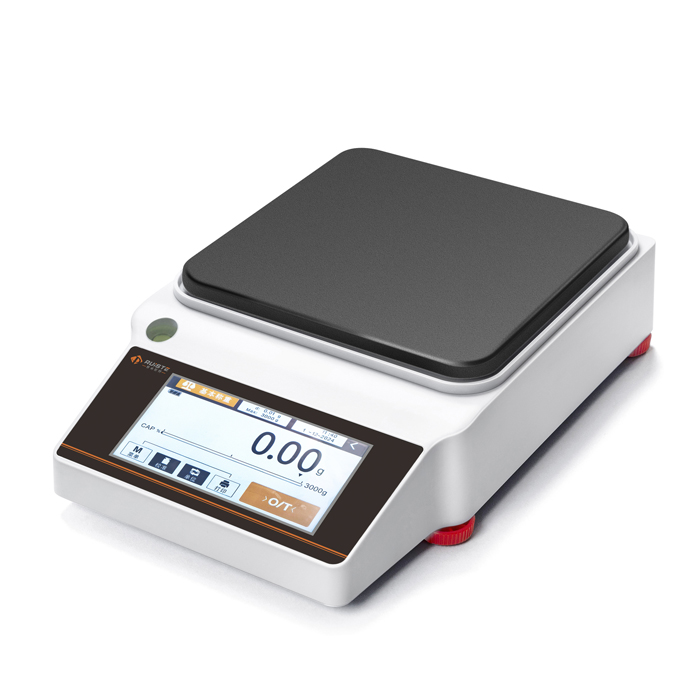
The operational logic of modern industrial weighing scales is built on mature mechanical and electronic sensing technology, with load cells serving as the core functional component that realizes weight signal conversion. The entire weighing process follows a complete and precise signal transmission and processing mechanism: when a measured object is stably placed on the bearing platform of the scale, the gravitational force generated by the object’s mass is completely transmitted to the internal load-bearing structure, which acts on the precision load cell fixed inside the equipment. The load cell, a high-sensitivity force transducer, produces tiny elastic deformation under the action of mechanical pressure, and the strain gauges tightly attached to its elastic body will undergo synchronous deformation, resulting in regular changes in internal resistance values. This subtle resistance change is further converted into a weak analog electrical signal that is positively proportional to the weight of the measured object. Subsequently, the built-in circuit system of the industrial scale amplifies the weak electrical signal, filters out interference signals generated by environmental vibration and electromagnetic fluctuations, and completes analog-to-digital conversion through a high-precision conversion module. Finally, the processed digital signal is calculated and identified by the internal microprocessor, and the accurate weight value is output and displayed in real time, completing the entire weighing measurement process. This multi-step signal processing mechanism ensures that industrial scales can capture tiny weight changes and maintain measurement stability under complex industrial interference conditions.
The overall structural design of industrial weighing scales follows the dual core principles of mechanical stability and electronic precision, and the complete equipment system is composed of multiple collaborative functional modules, each undertaking irreplaceable operational responsibilities. The external bearing structure is mostly made of high-strength alloy steel or stainless steel materials, with thickened plate structures and anti-deformation reinforcement designs, which can resist long-term heavy load pressure, accidental impact, and friction wear in industrial scenarios, while avoiding structural deformation that affects weighing accuracy. The surface of the bearing platform is usually treated with anti-slip, anti-corrosion, and dust-proof processes to adapt to harsh working conditions such as material residue accumulation, humid air, and chemical agent contact. The internal core sensing module is composed of high-precision load cells and fixed support components, with installation positions strictly calibrated to ensure uniform force bearing and avoid measurement errors caused by eccentric load. In addition, the equipment is equipped with independent signal processing circuits, intelligent data processing chips, real-time display terminals, and interactive operation panels. Some enhanced models are also integrated with temperature compensation components, which can automatically correct signal deviations caused by ambient temperature changes. The modular structural design not only improves the overall operational stability of industrial scales but also facilitates daily inspection, component replacement, and equipment maintenance, greatly reducing the difficulty and cost of later operation and maintenance in industrial production.
Industrial weighing scales have undergone a complete technological iteration process from mechanical structure to electronic intelligence, and the upgrading of technical forms has fundamentally improved the performance boundaries and application value of weighing equipment. Early industrial weighing equipment completely relied on pure mechanical structures such as lever transmission and pointer induction to complete weighing measurement, with simple working principles and low equipment costs, but prominent functional defects. Mechanical industrial scales are large in size, heavy in weight, cumbersome in operation, and require manual reading and recording of data, which not only leads to low weighing efficiency but also is prone to subjective reading errors. Moreover, the mechanical transmission structure is easily worn and deformed after long-term use, resulting in continuous attenuation of measurement accuracy and frequent failure of equipment. With the development of electronic sensing technology in the early stage, electronic analog industrial scales gradually replaced mechanical equipment, realizing the preliminary transformation from mechanical signal transmission to electrical signal transmission, with improved accuracy and operational convenience. In recent years, with the rapid progress of digital technology and intelligent control technology, fully digital intelligent industrial weighing scales have become the mainstream of the market. The new generation of equipment abandons analog signal transmission, adopts full digital signal processing and intelligent algorithm optimization, realizes stronger anti-interference ability, higher measurement accuracy, and more stable long-term operation performance, and lays a technical foundation for subsequent data networking and intelligent management functions.
The application scenarios of industrial weighing scales cover almost all industrial production and commercial circulation fields, showing strong industry adaptability and scenario penetration. In the manufacturing industry, industrial scales are used for precision weighing of production raw materials, proportioning and metering of auxiliary materials in the production process, and quality inspection of semi-finished and finished products, providing accurate data support for standardized production and product quality control. In the chemical industry, the equipment adapts to the weighing demand of various granular, powdery, and liquid chemical raw materials, with anti-corrosion and sealed structural designs to avoid equipment damage and measurement deviation caused by chemical corrosion. In the food and pharmaceutical industry, stainless steel sanitary industrial scales are widely used, with smooth and easy-to-clean surfaces and dust-proof and pollution-proof designs to meet the strict hygiene standards of food and drug production. In the logistics and warehousing industry, large-capacity platform industrial scales are used for weighing and recording incoming and outgoing goods, assisting enterprises in inventory statistics, cargo settlement, and transportation load control. In the building materials and mining industry, heavy-duty industrial scales cope with the weighing of large-bulk, high-density ore, cement, and stone materials, adapting to high-load and high-dust harsh working environments. The differentiated design of equipment performance and structure enables industrial weighing scales to accurately meet the personalized weighing needs of different industries and different production links.
Scientific and reasonable model selection is the primary premise to ensure the stable operation and accurate measurement of industrial weighing scales in actual production applications, and enterprises need to comprehensively screen and match equipment according to core operational indicators and scenario characteristics. The first core selection indicator is the weighing range, which needs to reserve a reasonable load margin on the basis of the maximum weight of actual measured materials, avoiding long-term full-load operation of the equipment that accelerates component aging, and preventing excessive equipment range from affecting the measurement accuracy of small-weight materials. The second key indicator is measurement accuracy, which should be matched according to the production process requirements: high-precision production links such as pharmaceutical ingredient proportioning and precision parts processing need high-accuracy industrial scales, while bulk cargo counting and low-precision material statistics can adopt conventional accuracy equipment. In addition, environmental adaptability indicators cannot be ignored. For humid, dusty, corrosive, or high-temperature working scenarios, it is necessary to select industrial scales with corresponding protection levels and special material treatments. At the same time, enterprises also need to comprehensively consider operational efficiency requirements, select equipment with automatic tare, zero tracking, and fast response functions for high-frequency weighing scenarios, and choose equipment with stable and simple structures for low-frequency and heavy-load working environments. Standardized model selection can effectively avoid equipment performance mismatch, reduce measurement error rates, and extend the service life of industrial weighing equipment.
With the deep integration of industrial digitalization and intelligent manufacturing, modern industrial weighing scales have broken through the single weighing function of traditional equipment and realized the upgrading of intelligent and networked functions, becoming an important data collection node in industrial intelligent systems. Most new-generation industrial weighing scales are equipped with standardized data communication interfaces, which can realize real-time data transmission with industrial computers, production management systems, inventory management platforms, and intelligent printing equipment. This function completely abandons the traditional manual recording and manual input mode, effectively avoids data errors and information delays caused by human operation, and realizes automatic collection, real-time uploading, and centralized storage of weighing data. Meanwhile, the built-in intelligent algorithm of the equipment can realize automatic zero calibration, automatic tare clearing, abnormal weight judgment, and repeated weighing screening functions. When abnormal conditions such as overweight, underweight, and unstable placement of measured materials occur, the equipment will automatically trigger prompt feedback to help operators eliminate abnormal situations in a timely manner. Some advanced industrial weighing scales also support data trend analysis, weighing record query, and batch data statistics, which can provide effective data basis for enterprises to optimize production processes, count production output, and control production costs.
The operational stability and measurement accuracy of industrial weighing scales are closely related to the adaptation of the actual working environment, and different environmental factors will produce different degrees of impact on equipment operation, requiring targeted adaptive protection measures. Temperature change is one of the most common influencing factors: excessive high temperature will accelerate the aging of internal circuit components and cause signal drift, while excessive low temperature will reduce the sensitivity of load cell strain gauges and slow down signal response speed. Therefore, most industrial scales are equipped with intelligent temperature compensation systems to automatically correct measurement deviations caused by temperature fluctuations. Humid and dusty environments are also key factors affecting equipment operation: excessive dust accumulation on the bearing platform and internal gaps will affect the stress uniformity of the equipment, and humid air will easily cause circuit oxidation and component corrosion. Industrial scales used in such environments adopt fully sealed structural designs and dust-proof and moisture-proof treatments. In addition, vibration interference and electromagnetic interference in industrial production workshops will also affect the stability of electrical signals. Professional industrial weighing equipment is equipped with anti-vibration buffer structures and electromagnetic shielding modules, which can filter out external interference signals and ensure the stability and accuracy of weighing results in complex industrial environments.
Daily standardized maintenance and scientific maintenance management are crucial to maintaining the long-term stable performance and extending the service life of industrial weighing scales, forming a complete set of operational guarantee systems throughout the equipment life cycle. Daily maintenance work mainly includes surface cleaning and status inspection: after daily operation, operators need to clean up material residues, dust, and stains on the weighing platform to prevent hard deposits from affecting the flatness and stress uniformity of the platform, and check whether the equipment placement is horizontal, whether the power circuit is normal, and whether the display screen and operation keys are sensitive. Regular maintenance needs to be carried out in accordance with standardized cycles, including checking the firmness of internal component installation, testing the sensitivity of load cells, lubricating movable structural parts, and verifying the stability of signal transmission. Regular calibration is an indispensable core link in maintenance work. By using standard weights to test and verify the equipment, the measurement deviation of the equipment after long-term operation can be corrected, ensuring that the weighing accuracy is always within the effective range. At the same time, enterprises need to establish complete equipment operation records and maintenance files, record daily operation status, calibration time, fault maintenance content, etc., so as to track equipment performance changes in real time and provide basis for subsequent equipment maintenance and replacement.
Error control and accuracy management are the core operational requirements of industrial weighing scales in industrial production applications, and clarifying the source of errors and formulating targeted control measures can effectively improve the credibility of weighing data. The errors of industrial weighing scales are mainly divided into three categories: structural errors, environmental errors, and operational errors. Structural errors come from tiny mechanical deformation of internal components, aging of load cells, and circuit signal attenuation after long-term equipment operation, which can be effectively controlled through regular calibration and regular component inspection and replacement. Environmental errors are caused by temperature and humidity changes, ground vibration, electromagnetic interference, and uneven placement of the equipment, which can be avoided by optimizing the equipment placement environment, installing anti-interference devices, and using temperature compensation functions. Operational errors are the most common type of errors in actual use, including unstable placement of measured objects, eccentric load bearing, untimely tare clearing, and non-standard operation of startup and shutdown. Standardizing operator use specifications, strengthening pre-job skill training, and formulating unified equipment operation processes can greatly reduce manual operational errors. Through the full-process error control mechanism from equipment maintenance, environmental optimization to standardized operation, the measurement accuracy and data stability of industrial weighing scales can be maximized guaranteed.
As a basic metering device in industrial production, industrial weighing scales bear important practical value in improving enterprise production efficiency, optimizing resource allocation, and standardizing production management. In the production link, accurate weighing data helps enterprises realize precise proportioning of raw materials, effectively reduce material waste, improve product qualification rate, and reduce production cost consumption. In the inventory and circulation link, automatic weighing and data recording functions realize efficient statistics of incoming and outgoing materials, avoid inventory data deviation caused by manual statistics errors, and improve the refinement level of enterprise inventory management. In the quality supervision link, stable and accurate weighing data provides objective and credible basis for product quality inspection, helping enterprises establish standardized quality control systems and improve overall product quality. At the same time, the networked and intelligent functions of modern industrial weighing scales realize the docking of weighing data with enterprise management systems, promote the digital transformation of enterprise production management, help managers grasp production dynamics in real time, optimize production scheduling, and improve the overall operational efficiency of enterprises. With the continuous improvement of industrial production refinement requirements, the basic supporting role of industrial weighing scales in industrial economic operation will become more prominent.
Looking at the future development trend of industrial weighing scales, driven by intelligent technology, Internet of Things technology and big data analysis technology, industrial weighing equipment will develop towards higher precision, stronger intelligence, better environmental adaptability and deeper data integration. In terms of precision technology, with the continuous innovation of sensor manufacturing technology and signal processing algorithms, the measurement accuracy of industrial scales will be further improved, and the ability to identify tiny weight changes will be strengthened, which can meet the higher-precision metering needs of emerging industries such as new energy materials and precision manufacturing. In terms of intelligent functions, future industrial weighing scales will integrate artificial intelligence recognition technology, which can automatically identify material types, judge weighing validity, and realize fully automated unmanned weighing operation. In terms of environmental adaptability, new high-strength, anti-corrosion, and anti-interference materials will be widely used, enabling equipment to adapt to more extreme industrial working environments. In terms of data application, industrial weighing scales will become important terminal nodes of industrial Internet systems, realizing interconnection and data sharing with multiple production equipment and management platforms, and providing more comprehensive and in-depth data support for enterprise intelligent decision-making. While continuously optimizing equipment performance, industrial weighing scales will further expand their application value and become an indispensable core equipment for the high-quality development of modern industrial economy.
Pruiste supply precision balance,analytical balance,laboratory balance,moisture analyzer,digital viscometer,weighing scale,counting scale for sale, wholesale and custom fabrication. we are a professional manufacturer and supplier of electronic balance in china.
 Chinese Mobile
 Whatsapp Service
 WeChat Service


