

 Language
Precision weighing scales are high-sensitivity measuring instruments designed for accurate mass detection of tiny objects. Featuring advanced sensor technology and smart signal processing, they deliver reliable, repeatable readings for lab, industrial, and daily precision measurement scenarios.
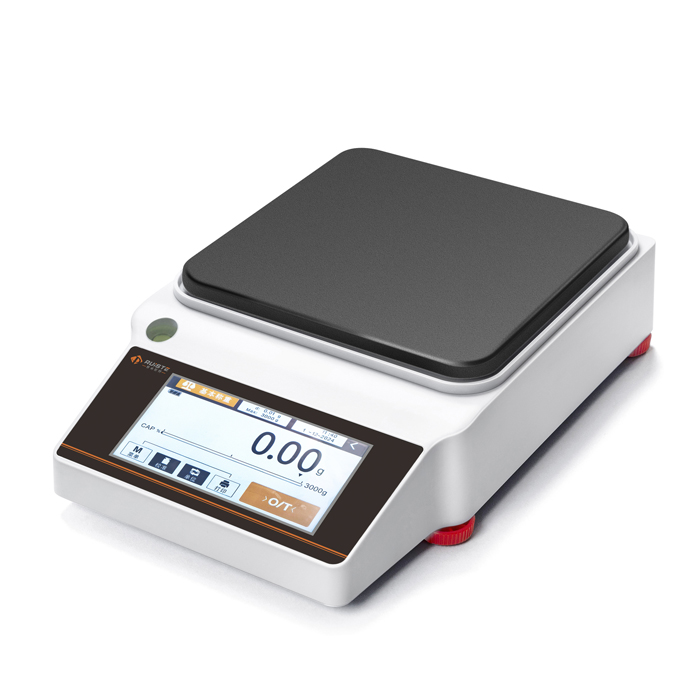
Precision weighing scales stand out from ordinary weighing tools primarily due to their exceptional measurement sensitivity and data stability. Unlike regular scales that only meet basic rough weighing needs, these specialized instruments are engineered to capture subtle mass changes that are invisible to standard devices. Their core design focuses on minimizing measurement errors caused by external interference and internal component deviation, making them indispensable for scenarios that demand strict data accuracy. Every structural and electronic optimization is aimed at refining reading precision to support meticulous quantitative work across diverse fields.
The core operation of modern precision weighing scales relies on mature and efficient sensing and signal conversion systems. When an object is placed on the weighing pan, the built-in high-performance load cell generates slight elastic deformation under the object’s gravity. Professional strain gauges inside the sensor convert this mechanical deformation into weak electrical signals, which are then transmitted to a built-in microprocessor. The intelligent chip amplifies, filters, and calibrates the signals through precise algorithms, eliminating fluctuating interference data and converting effective signals into accurate digital mass values for real-time display.
Many high-end precision weighing scales adopt electromagnetic force compensation technology to further enhance measurement accuracy. This working mechanism creates an electromagnetic force that counteracts the weight of the measured object, maintaining the balance of the weighing structure. The magnitude of the compensating electromagnetic force is strictly proportional to the object’s mass, providing a more stable and sensitive measurement basis than traditional strain sensing alone. This technology effectively reduces systematic errors and enables the scales to deliver consistent readings even for ultra-light samples with minimal mass differences.
Functional diversity is a key advantage of modern precision weighing scales, greatly improving operational convenience and measurement efficiency. The widely equipped tare function allows users to deduct the weight of containers, trays, or packaging materials with one click, directly obtaining the net mass of measured samples and avoiding manual calculation errors. Most models also support multi-unit conversion, enabling flexible switching between different mass measurement units to adapt to various usage habits and measurement requirements in different application scenarios.
A practical piece-counting function is another valuable feature embedded in many precision weighing scales. This function calculates the average mass of a single item by sampling a small number of uniform small parts, then automatically computes the total quantity of bulk items based on the total measured mass. It is highly suitable for counting tiny accessories, granular materials, and small component batches, replacing inefficient manual counting and effectively improving work efficiency while ensuring counting accuracy for fine batch management work.
The structural design of precision weighing scales fully considers environmental adaptability and measurement stability. The weighing pan is usually made of high-strength, corrosion-resistant materials, which is easy to clean and not easily deformed or damaged during long-term use. The overall body adopts a stable anti-shake structure to reduce the impact of desktop vibration and slight external movement on measurement results. Some optimized designs also have dust-proof and splash-proof properties, protecting internal precision electronic components from daily environmental pollution and extending the service life of the equipment.
Display and interactive design further optimizes the user experience of precision weighing scales. Most devices are equipped with high-definition backlit display screens, which can present clear and intuitive digital readings even in dim lighting environments. The display interface is simplified and standardized, with stable data locking functions to prevent reading confusion caused by real-time data fluctuations during weighing. The simple button layout enables operators to master basic operations quickly without complex professional training, lowering the threshold for daily use.
Precision weighing scales have extremely wide application coverage in professional research scenarios. In experimental research work, they are used for accurate weighing of experimental reagents, sample preparations, and trace material quantification, providing reliable data support for experimental data analysis and result verification. Slight mass deviations may affect the entire experimental conclusion, so the high stability and precision of these scales become a basic guarantee for the authenticity and accuracy of scientific research data.
In fine processing and manufacturing fields, precision weighing scales play an irreplaceable role in quality control and production matching. They are used for ingredient proportioning of fine raw materials, quality inspection of finished products, and weight screening of precision parts. Accurate weight control ensures the consistency of product formulas and finished product quality, effectively avoiding product performance deviations caused by uneven raw material ratios or unqualified part weights, and helping enterprises maintain stable production quality standards.
Daily commercial and high-precision civilian scenarios also rely heavily on these professional weighing tools. In fine commodity trading, jewelry detection, and high-end handmade production, precision weighing scales ensure the fairness of transactions and the accuracy of production processes. Their portable and compact structural design makes them easy to carry and place, meeting the mobile measurement needs of different working spaces while maintaining professional-level weighing accuracy.
Long-term stable performance is a prominent advantage of qualified precision weighing scales. Through strict internal component calibration and algorithm optimization before leaving the factory, these devices can maintain low error levels during long-term continuous use. Regular simple maintenance, including surface cleaning and placement leveling, can effectively sustain their measurement accuracy. With reliable performance and diverse functions, precision weighing scales have become essential precision measuring tools integrating professionalism, practicality and convenience.
Pruiste supply precision balance,analytical balance,laboratory balance,moisture analyzer,digital viscometer,weighing scale,counting scale for sale, wholesale and custom fabrication. we are a professional manufacturer and supplier of electronic balance in china.
 Chinese Mobile
 Whatsapp Service
 WeChat Service


