

 Language
The USB-enabled electronic balance has emerged as a pivotal precision weighing device that integrates traditional high-accuracy mass measurement technology with modern digital data transmission functions, catering to the evolving demands of smart laboratory operations, industrial quality control, and daily precise measurement scenarios. Unlike conventional electronic balances that only support on-site data display and manual recording, this upgraded equipment embeds a built-in USB communication module, enabling seamless connection with external terminal devices such as desktop computers, laptops, and mobile data storage devices. It retains the core advantages of electronic balances, including sensitive induction, stable measurement performance, and minimal reading errors, while solving the long-standing drawbacks of manual data entry errors, slow information sorting, and inconvenient data traceability. By converting real-time weighing analog signals into standardized digital signals and transmitting them via USB interfaces, the device realizes automatic data collection, remote real-time monitoring, and long-term data retention. This innovative integration of weighing hardware and digital transmission technology greatly improves the intelligence and efficiency of precision weighing work, making it widely adaptable to diverse application scenarios that require accurate measurement and standardized data management.
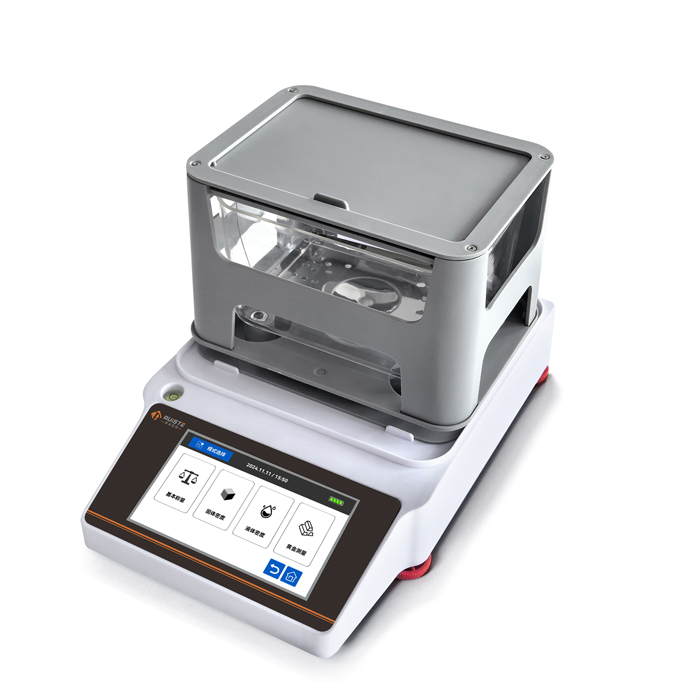
At the core of the USB electronic balance lies the perfect combination of high-precision weighing sensing technology and mature USB digital transmission mechanisms. The weighing system operates mainly based on electromagnetic force compensation and strain gauge induction principles. When a sample is placed on the weighing pan, the gravity of the object triggers subtle deformation or displacement of the internal sensor structure. The built-in precision detector captures these tiny physical changes and converts them into weak analog electrical signals. These original signals are susceptible to environmental interference such as static electricity and temperature fluctuations, so they are first processed by a professional signal conditioning circuit for amplification, filtering, and noise reduction to ensure signal purity and accuracy. Subsequently, the optimized analog signals are converted into standard digital data through a high-speed analog-to-digital converter. The embedded microprocessor inside the balance sorts and calibrates the digital data in real time, generating accurate weighing results. With the support of the internal USB communication protocol chip, the processed weighing data is packaged into identifiable signal formats, which can be stably transmitted to external equipment through the USB interface, completing the whole process from physical weighing to digital data output.
The USB interface configuration of modern electronic balances supports flexible and diverse connection modes, fully meeting the differentiated usage needs of different users and scenarios. Most USB electronic balances are equipped with dual functional USB modes, including quick one-way transmission mode and virtual COM two-way communication mode. In quick USB mode, the device automatically transmits real-time weighing data to connected terminal devices without complex parameter setting, which is suitable for simple and efficient daily data collection work. The virtual COM mode simulates a traditional serial port communication channel, enabling two-way data interaction between the balance and external devices. Through this mode, users can not only upload weighing data to computers but also send adjustment instructions, parameter calibration commands, and data clearing instructions from terminals to the balance, realizing remote intelligent control of the equipment. In addition to connecting computer terminals, the USB interface also supports direct connection with USB flash drives, allowing users to store weighing data locally without computer assistance. The independent local storage function ensures that measurement data can be completely recorded even in offline working environments, avoiding data loss caused by equipment disconnection or system failures.
The application of USB digital transmission technology fundamentally optimizes the data management process of precision weighing work and effectively avoids various problems caused by manual operation. In traditional weighing work, operators need to manually observe readings and record data on paper or electronic documents, which is not only time-consuming and labor-intensive but also prone to human errors such as reading mistakes, recording omissions, and data transcription deviations. These errors may lead to inaccurate experimental results, unqualified product quality inspection data, and inconsistent measurement records, affecting the authenticity and validity of overall work data. The USB electronic balance realizes automatic full-process data recording and transmission. Every weighing result is captured, processed, and uploaded in real time without manual intervention, ensuring the consistency and accuracy of each data record. Moreover, the transmitted data can be directly imported into various data analysis and office software for batch sorting, statistical analysis, and report generation, greatly simplifying the post-processing work of weighing data and significantly improving the overall work efficiency of laboratories, production workshops, and detection institutions.
Stability and compatibility are two prominent advantages that make USB electronic balances widely recognized in professional precision measurement fields. In terms of transmission stability, the optimized USB communication module adopts anti-interference circuit design, which can effectively resist the influence of external electromagnetic signals, temperature changes, and vibration interference in complex working environments. During long-term continuous weighing and data transmission, the equipment maintains stable signal output without data delay, packet loss, or signal distortion, ensuring the continuity and integrity of measurement data. In terms of system compatibility, the USB interface of the balance is adapted to most mainstream operating systems, which can be quickly identified and matched by terminal devices without the need for complex driver installation and system debugging. It can be seamlessly connected with various common terminal devices and data processing software, realizing barrier-free data transmission and interaction. This excellent compatibility enables the equipment to be quickly integrated into existing working systems of different industries, reducing the cost of equipment adaptation and system upgrade for users, and improving the practicability and universality of the weighing equipment.
USB electronic balances show strong scenario adaptability and functional scalability, covering multiple fields from basic experimental research to industrial production detection. In scientific research laboratories, the equipment provides high-precision real-time weighing data and complete data recording records, which is conducive to researchers tracking experimental data changes, verifying experimental results, and retaining complete experimental archives, laying a solid data foundation for scientific research innovation and experimental result verification. In industrial production and quality inspection links, it is used for precision weighing of raw materials, semi-finished products, and finished products. Automatic data transmission and recording help enterprises realize standardized quality monitoring, facilitate product quality traceability, and effectively control product quality stability. In commercial detection, pharmaceutical preparation, and food processing industries, the equipment’s accurate measurement and standardized data management functions meet the strict data recording and archiving requirements of industry operations. Meanwhile, the expandable USB interface can be matched with auxiliary equipment such as barcode readers and external input devices according to actual needs, further enriching equipment functions and realizing more intelligent and automated weighing operation processes.
In terms of daily operation and maintenance, USB electronic balances have obvious user-friendly characteristics, reducing the operation threshold and maintenance cost for users of different levels. The equipment retains a simple and intuitive body operation panel, supporting basic weighing, zeroing, peeling, and parameter setting operations on the machine, which is convenient for quick manual operation in simple scenarios. The USB data transmission function is plug-and-play in most conventional usage states, requiring no professional operation skills. Operators can complete equipment connection, data transmission, and data storage through simple wiring and basic equipment matching operations. In terms of daily maintenance, the integrated USB module has a stable structural design with low failure rate, avoiding frequent equipment failures caused by interface looseness or signal instability. The systematic data recording function also facilitates daily equipment inspection and data verification. Users can check historical weighing data through terminal devices at any time, verify equipment measurement accuracy, and timely discover and solve potential equipment operation problems, ensuring long-term stable and reliable operation of the electronic balance.
With the continuous development of intelligent manufacturing and digital detection technology, USB electronic balances are evolving towards higher precision, smarter data processing, and more diversified functional expansion. The continuous upgrading of internal sensing and signal processing technology further improves the measurement accuracy and response speed of the equipment, enabling it to adapt to higher-standard precision measurement tasks. The optimization of USB communication protocols realizes faster data transmission speed and more stable long-distance signal transmission, breaking the limitation of short-distance wired connection in traditional weighing equipment. In addition, the combination of USB data transmission and cloud data management technology has become an important development trend. The weighing data transmitted through the USB interface can be uploaded to cloud platforms for remote storage, multi-terminal sharing, and big data analysis, realizing remote real-time monitoring of weighing equipment, unified management of measurement data, and intelligent early warning of equipment exceptions. This continuous technological innovation will further expand the application value of USB electronic balances and promote the overall digital and intelligent upgrading of the precision weighing industry.
Pruiste supply precision balance,analytical balance,laboratory balance,moisture analyzer,digital viscometer,weighing scale,counting scale for sale, wholesale and custom fabrication. we are a professional manufacturer and supplier of electronic balance in china.
 Chinese Mobile
 Whatsapp Service
 WeChat Service


