

 Language

Precision balance with wind shield eliminates airflow interference for stable, repeatable lab weighing. Built with transparent draft shield, sensitive sensor and anti-static design for fine powder & micro sample measurement.
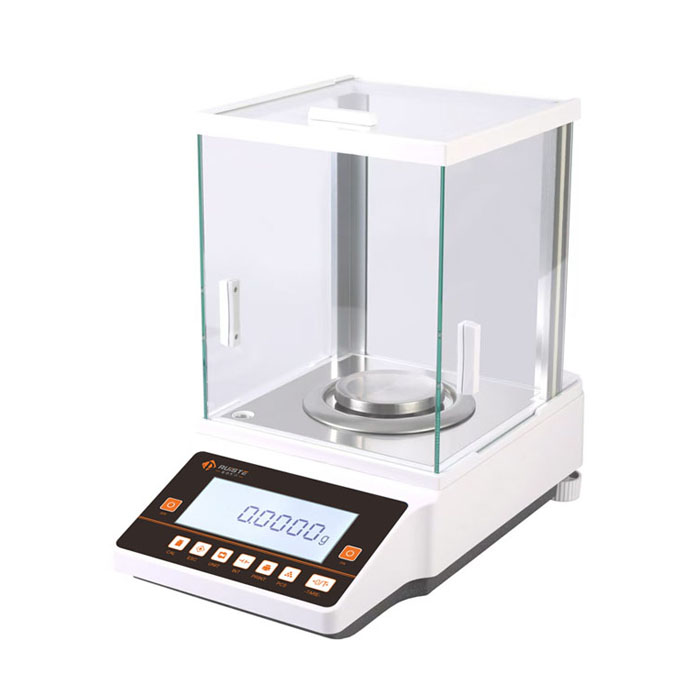
A precision balance with a wind shield stands as a refined piece of weighing equipment built to capture extremely small mass differences that ordinary scales cannot detect. At its core, the device relies on a highly sensitive internal sensing mechanism that reacts gently to even the faintest changes of load placed on the weighing pan. The wind shield, which wraps around the weighing area, serves as its most recognizable and functional feature, separating the sample space from the surrounding ambient environment. Air movement in a room, whether from ventilation systems, people walking past, or warm air rising from nearby equipment, can create invisible force disturbances that skew readings when measuring samples of very low weight. This protective enclosure blocks such airflow before it touches the weighing pan, stabilizing the local air around the sample so the sensor can register weight with consistent subtlety. Users who work with tiny particulate samples, fine powders, or small solid fragments quickly learn that without this barrier, repeated measurements will drift and fail to match one another. Every component of the wind shield is designed to avoid introducing extra weight or vibration to the balance itself, with smooth, tight-fitting panels that move without rattling when opened and closed. Careful handling of the shield is essential; slamming its doors or pushing the panels too hard can transfer shock to the delicate internal sensor and temporarily compromise measurement stability. Even minor touches to the shield frame during operation can create enough friction or movement to alter a reading, so established practice encourages users to adjust the enclosure slowly and patiently while taking measurements.
The construction materials chosen for the wind shield balance balance durability, low static buildup, and clear visibility in equal measure. Transparent panels form the main viewing surfaces, allowing operators to observe the sample and weighing pan without opening the enclosure and breaking the protected air space. These panels resist minor scratches from routine contact and chemical splashes that commonly occur in laboratory environments, though they remain vulnerable to harsh abrasive cleaners that can cloud the surface over time. The supporting frame of the wind shield is rigid but lightweight, shaped to hold panels securely while limiting thermal transfer from the user’s hands or external heat sources. Static electricity is a persistent hidden challenge when weighing fine powders, as charged particles can cling to the shield interior or jump away from the weighing pan, creating inconsistent apparent mass. Many shield designs incorporate material properties that reduce static accumulation, cutting down on this unpredictable interference without requiring additional external accessories. The joints between panels are fitted closely to narrow gaps where stray air might seep in, yet they are not sealed completely airtight, because full airtight construction could create pressure shifts when the shield is opened or closed. Those small controlled gaps allow slow pressure equalization between the interior and exterior of the shield, preventing sudden air pressure spikes that would push against the weighing pan and distort results. All materials are selected to maintain stable dimensions across normal room temperature fluctuations, so the shield does not warp and lose its alignment after months of regular daily use.
Setting up a precision balance with a wind shield correctly forms the foundation of reliable weighing results, and the process begins long before any sample is placed on the pan. The unit must rest on a solid, stable surface isolated from floor vibrations transmitted by nearby machinery, foot traffic, or water pipes running through the building. Wobbly benches or thin tabletops amplify subtle vibrations, and those vibrations pass straight through the base of the balance to the sensitive sensor, causing readings to flicker endlessly. Once positioned, the balance is leveled using integrated adjustable feet, while the built-in level indicator guides fine adjustments until the instrument sits perfectly horizontal. After leveling, the wind shield is checked to confirm all moving panels slide smoothly and close properly, with no obstructions that leave unintended openings for drafts. The entire device then needs a period of thermal acclimatization, allowing its internal temperature to match the temperature of the surrounding room. If the balance has recently been moved from a cooler or warmer storage space, temperature gradients inside the wind shield will create slow, circulating air currents that shift measurements for hours. During acclimatization, the wind shield doors are kept closed most of the time, only opened briefly to inspect the pan. Operators also avoid placing the balance near windows, heating vents, cooling fans, or direct sunlight, all of which combine airflow and uneven heating to undermine the shield’s protective purpose. Only after the balance stabilizes fully should preliminary checks and sample weighing begin.
Operating the wind shield balance follows a deliberate sequence that minimizes disturbance to the controlled environment within the enclosure. Before placing any sample, the weighing pan is inspected to remove dust, leftover residue from previous samples, or stray particles that could add unaccounted mass. A tare function resets the displayed reading to zero with the empty pan inside the closed wind shield, establishing a baseline measurement that accounts for the pan itself and any container used to hold the sample. The operator opens one panel of the wind shield just wide enough to place the sample or container on the center of the pan, avoiding contact between the sample vessel and the shield walls. Opening multiple panels at once invites a rush of room air into the protected space, and it can take extra time for conditions inside to settle again. Once the sample is set down, the panel is closed gently, and the user waits for the reading to stabilize. This waiting period gives internal air movement to die away and allows the sensor to settle into a steady value. Rushing to record a number before stabilization often captures transient air effects rather than the true mass of the sample. Hands should never reach inside the wind shield longer than necessary, because body heat from the operator warms the air locally and creates convection currents. Gloves are commonly used not only to prevent contamination of samples but also to reduce oil and moisture transfer from skin onto the pan and shield surfaces.
Sample preparation practices directly interact with the performance of the wind shield, as poorly prepared samples can introduce variability that even the best airflow barrier cannot eliminate. Fine, low-density powders are among the most demanding materials for this type of balance, because individual particles are easily lifted and moved by the slightest air motion inside the enclosure. Samples with temperature differentials relative to the air inside the wind shield create their own convection currents, rising warm air around the sample behaves like a tiny upward force that makes the sample appear lighter than its true mass. For this reason, samples stored in refrigerators or ovens are brought out ahead of time and left to reach room temperature before weighing inside the shield. Hygroscopic samples, which absorb moisture from the air, require extra care; the time spent with the wind shield open must be kept brief to limit exposure to humid ambient air. When transferring powder into a weighing vessel, transfers happen outside the shield whenever possible, and the loaded vessel is placed quickly onto the pan and enclosed. Larger solid samples present fewer airflow challenges, but irregular shapes can create uneven air drag inside the shield if positioned near the openings. Operators make it routine to place all samples toward the center of the weighing pan, where the local air environment is the most uniform and least affected by edges of the shield structure. Consistent sample handling paired with the wind shield’s protection produces measurement series with far tighter agreement between repeated trials.
Routine cleaning and maintenance preserve the accuracy and lifespan of a precision balance with a wind shield, preventing accumulated contaminants from gradually degrading performance. Cleaning work is carried out with the balance powered off, to avoid accidental impact on active sensing parts and to reduce static buildup that occurs during wiping. The interior of the wind shield, including the inner faces of transparent panels and the frame, is wiped with soft, lint-free cloths that do not shed tiny fibers onto the weighing pan. Dry cloths are preferred for most light dust removal; damp cloths are used sparingly, and excess moisture is avoided completely, because liquid can seep into gaps around the sensor base and cause lasting damage. Abrasive wipes and strong solvent cleaners are avoided, as they scratch the transparent panels and can leave thin films that attract dust and static charge over time. The sliding tracks of the wind shield panels are inspected regularly for trapped dust or grit, which can make movement stiff and cause panels to jam. Gentle brushing removes debris from tracks, and lubricants are rarely needed, since added oils can attract dust and contaminate the weighing zone. The weighing pan is removed periodically for thorough cleaning, taking care not to bend or deform its thin, flat surface. After cleaning, the balance is left with the wind shield slightly ajar for a short time to dry fully before powering back on and resuming measurements. Consistent light maintenance prevents small issues from becoming hidden sources of measurement error over months of frequent use.
Understanding measurement uncertainty helps users interpret the numbers produced by the wind shield balance realistically, recognizing that the wind shield removes one major source of error while others remain present. The shield eliminates macro-scale drafts from the room, but it cannot fully suppress extremely slow convection currents that form inside the closed enclosure when uneven heating exists. Small static charges on sample particles or the shield interior continue to exert electrostatic forces on the load, pulling it upward or sideways and shifting readings in ways that are hard to predict. Mechanical noise within the sensor itself, minor electronic drift, and residual vibration transmitted through the bench all contribute to a small range of variation between identical repeated measurements. Operators often complete multiple replicate readings for the same sample, closing the wind shield fully and waiting for stabilization each time, then reviewing the spread of results to judge reliability. A tight cluster of readings signals that the combined effect of remaining uncertainty sources is small, while scattered values point to an unaddressed problem such as static, residual vibration, or temperature mismatch. The wind shield’s greatest value is that it removes the largest and most unpredictable variable, uncontrolled room airflow, so other smaller error sources become easier to identify and manage. Without this enclosure, airflow noise would dominate results and make it impossible to distinguish meaningful sample mass differences from random air forces. Learning to recognize the limits of the wind shield prevents users from assuming that every stable digital reading is automatically free of subtle hidden influences.
Common operational mistakes reduce the effectiveness of the wind shield, and recognizing these habits helps users build more reliable weighing workflows. One frequent error is leaving one or more shield panels partially open during readings, under the assumption that light air movement will not affect the result. Even a narrow gap can let a steady stream of room air cross the weighing pan, creating a constant offset in the measured value. Another mistake is breathing directly into the open wind shield space while positioning a sample; exhaled air is warmer and moister than surrounding air, creating a temporary convection plume around the pan that lingers after the panels close. Some users tap the balance frame or the wind shield to dislodge stuck powder, and this sharp jolt transmits mechanical shock to the delicate sensor, which may take many minutes to settle back to a stable state. Operating near running equipment that emits heat is also easy to overlook, as heat slowly penetrates the shield and sets up internal air circulation. Opening and closing the shield rapidly in quick succession creates pressure pulses inside the enclosure, pushing air against the sample and causing the display to jump. Many of these mistakes happen when users work quickly to process a long list of samples, prioritizing speed over the steady conditions the wind shield is designed to maintain. Slowing the pace slightly, moving shield panels gently, and keeping the enclosure closed whenever a reading is being captured brings out the full capability of the instrument.
Careful storage and handling during relocation protect the wind shield balance from physical harm that impairs its protective function and internal sensing ability. When the device will not be used for an extended period, the wind shield panels are closed, and a loose protective cover can be placed over the whole unit to block settling dust. The cover is not sealed tightly, so trapped moisture does not build up inside the shield and cause corrosion or fogging on transparent surfaces. If the balance must be moved to another location, the weighing pan is removed separately and packed securely, because shifting movement during transport can bend the pan or damage the suspension system of the sensor. The wind shield panels are secured to prevent them from sliding freely and striking the frame, which could crack transparent sections or knock the frame out of alignment. Carrying the balance by its base is the only safe method; lifting by the wind shield frame puts stress on the joints holding panels in place and can warp the enclosure geometry. After transport, the unit requires full re-leveling, cleaning, and thermal stabilization before use, just as it would when first installed. Even short moves across the same room can create subtle misalignment that weakens the shield’s ability to block drafts. Treating the wind shield as an integrated precision component rather than a simple plastic casing helps users avoid rough handling that undermines the instrument’s core purpose long before obvious damage appears.
The role of a precision balance with a wind shield extends across many lines of work where accurate small-mass measurement forms the backbone of observation and preparation. In analytical laboratory settings, it is used to weigh tiny quantities of solid starting materials for mixture preparation, where even a fraction of a milligram difference changes the final composition of a prepared mixture. It supports sample preparation for observational testing, where the mass of collected residues or extracted materials must be recorded before further processing. Those working with fine particulate materials rely on it to track yields after separation processes, comparing the starting mass of feed material against recovered fractions. The wind shield makes this kind of fine weighing practical in ordinary indoor spaces that lack specialized low-draft chambers, bringing high-resolution measurement capability into standard work areas. While other environmental controls can improve weighing conditions further, the integrated wind shield remains a straightforward, dependable solution that is built directly into the instrument. Its design balances simplicity of daily use with targeted performance, requiring no complex supporting systems to deliver its main benefit. For anyone whose work depends on capturing consistent, repeatable mass values of small samples, the wind shield is not merely an add-on accessory but an essential part of the balance system. It bridges the gap between the extreme sensitivity of the internal sensor and the chaotic, moving air of the surrounding room, turning a delicate sensing element into a practical tool for precise weighing day after day.
Pruiste supply precision balance,analytical balance,laboratory balance,moisture analyzer,digital viscometer,weighing scale,counting scale for sale, wholesale and custom fabrication. we are a professional manufacturer and supplier of electronic balance in china.
 Chinese Mobile
 Whatsapp Service
 WeChat Service


